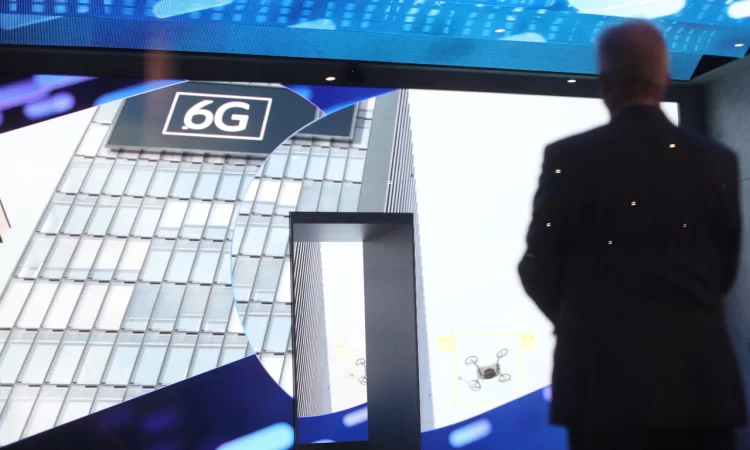

6G envisions universal coverage, greater bandwidth and capacity, and lower latency than 5G. Industry, research and government efforts have begun, and the eagerness for innovation makes 6G an inevitable timestamp. Yet, many operators continue the complex and costly journey to launch public 5G standalone; a new G is not a high priority. To avoid repeating previous mistakes and complexity, operators must voice their opinions.
Defining the next era will primarily be driven by standards and technical trials. In December 2024, 3GPP took a giant step forward by approving a study (supported by over 50 companies) on 6G Use Cases and Service Requirements (Stage 1). Meanwhile, research alliances, academia, vendors and industry continue to learn how a new generation should benefit users, impact the planet and uplift technology.
In this blog, RUTH BROWN summarizes the progress in defining 6G use cases and why research and testing are critical proof points and also examines how the creation of 6G must navigate the pitfalls of previous mobile generations.
6G use cases and drivers
In mid-2024, 3GPP finalized its first 5G Advanced standard (Release 18), adding features to the 5G baseline and a stepping stone toward 6G. Thought leadership continues to explore the societal, environmental and technical advances driven by early themes, drivers and use cases.
Back in December 2023, the International Mobile Telecommunication Union (ITU) published a framework for developing 6G standards (ITU-R M.2160). This document examines use cases in the context of enhancements to 5G use cases and new advanced system extensions. Organizations across the telco ecosystem, including Ericsson, Nokia, Qualcomm, e&, NGMN, Next G Alliance and DOCOMO, are already exploring 6G and the guiding principles for creating an achievable technology.
6G themes and use cases across the ecosystem typically fall into the following categories:
Hyper-reliable low latency services: Prioritized emergency services support and autonomous vehicles and machines (e.g., drones, collaborative robots, and machinery). Secure and reliable, they utilize AI-driven self-healing networks for resilience. 6G aims to extend the target ranges and use cases from 5G, but differentiating these capabilities will be challenging.
Immersive mixed reality: Merging of the real world, digital objects and information. Consistent, low latency and network capacity (high up/downlink data rates) for new lightweight glasses and slimline devices that enable multiplayer/user mixed reality experiences. Device capabilities and battery life longevity are a priority for this use case.
Massive comms: Scenarios include native management of massive Internet of Things (IoT) for data collection, tracking, industrial use cases, smart home/building, etc. Communication and devices must be low cost, minimize unnecessary signaling and support near real-time communications for some applications. 5G IoT has progressed slowly, with many IoT use cases fulfilled adequately by 4G. 6G will need to add significant functionality.
Sensing and communication: Integrated sensing enabling positioning and network (radar-like) capabilities with voice integration from the outset. Knowledge of geographical positioning and other objects within the operational environment to solve practical issues. Strong security and privacy frameworks are vital to upholding user and device confidentiality.
Ubiquitous coverage: Indoors and outdoors coverage extensions will utilize technologies such as satellite, Wi-Fi and roaming to ensure digital inclusion and enhance capacity. Wireless networks must be cooperative in all locations and environments and not compete. Practical considerations such as cost, application requirements and user experience are vital. This capability will rely on collaboration across standards bodies like 3GPP, IEEE, IETF and the WBA to ensure interoperability.
AI native integration: Applies to every layer, including access, core networks and devices, intelligent automation, optimization and efficiency. Future networks will leverage network data and analytics within digital twin modeling scenarios for planning, root cause analysis, testing new features, etc., to increase performance and reliability. Finding a balance between the benefits of AI native integration and the complexity of implementing the technology will be challenging.
Early R&D activities and trials will contribute toward standardization and shaping the commercial direction of 6G. Target capabilities set out in the ITU paper for peak data rates, mobility, reliability and latency provide upper limits to explore. In 2024, 6G tests and research announcements included Samsung and Arm (parallel packet processing development), Ericsson and Keysight (pre-standard 6G protocol stack PoC), Beijing University (6G field test), DOCOMO with NTT, and Nokia and SK Telecom (AI optimized transmission and reception processing tests). Others, such as Qualcomm, are creating 6G thought leadership hubs and discussing issues like core technology changes, environmental and societal sustainability, and new enhanced 6G experiences.
The creation of 6G
3GPP working groups must now dissect the high level ambitions and lab progress to create solid, realistic deployment scenarios and requirements covering 6G radio access and network technology demands for Release 21 (the first 6G standard). The figure below tracks the initial 3GPP 6G milestones, as well as early tests and the related research activity.
Defining the timeline
Progress will begin in March as the 3GPP technical specification groups (TSGs) kick off Release 20 studies on radio interface and 6G core network architecture within the RAN and SA Working Groups, respectively. Representatives across the ecosystem expect to provide input and statements to guide this preliminary study and its aims in the first 3GPP TSG-wide 6G workshops.
6G must incorporate the new use cases and capabilities but also navigate mistakes from previous generations, including high cost, multi-stage adoption and standardization nuances:
Multi-stage technology adoption: Many operators rolled out an interim 5G non-standalone (NSA) phase (radio systems upgrade ahead of the core). 5G Voice (Voice over New Radio) is also a secondary element, with most 5G networks primarily offering data-only services. 6G should aim to deliver a single 6G implementation path to avoid device upgrades and bad user experiences.
Complexity: Operators have navigated numerous new technologies, including radio, disaggregation and the transition to cloud technology. They are minimizing changes to the air interface, reusing the spectrum across generations (if practical) and introducing automation to remove some elements of cost and complexity.
Optional versus mandatory: Standardization typically includes both optional and mandatory features. 5G standards from Release 15 onward have included more optional features. For devices, too much optionality can be challenging to manage in terms of implementation priority. 6G must decide how to manage this issue.
Requirements and specification cost control: Standardization essentially consists of guidelines that vendors and operators choose to implement. Cost and ROI will always govern feature selection and implementation. Future specifications must also consider cost and use lightweight architectures where suitable, as mentioned in a previous blog, “A lightweight convergence architecture for the always-connected generations.”
Use cases form an essential entry point to experiment and develop new standards. Therefore, 6G research and lab activity must be iterative and share regular outcomes to foster accurate, achievable, business-focused requirements to form the new specification. The perpetual evolution of mobile technology is unstoppable, so the industry must look at 6G standardization approaches that eradicate cost and complexity. At the same time, these approaches must create stronger and more viable use cases verified by the entire ecosystem and verticals.
- Brown is Principal Analyst, Mobile Networks at Heavy Reading.