Nigeria’s Digital Economy Will Empower Citizens, Bridge Divides, And Drive Unity – DG NITDA


By Angeline Mgbele, Bureau Chief, Northern Nigeria
The Director-General of the National Information Technology Development Agency (NITDA), Mallam Kashifu Inuwa Abdullahi, has reiterated the Federal Government’s commitment to deepening digital literacy, accelerating innovation, and expanding technology infrastructure as key drivers of inclusive national development.
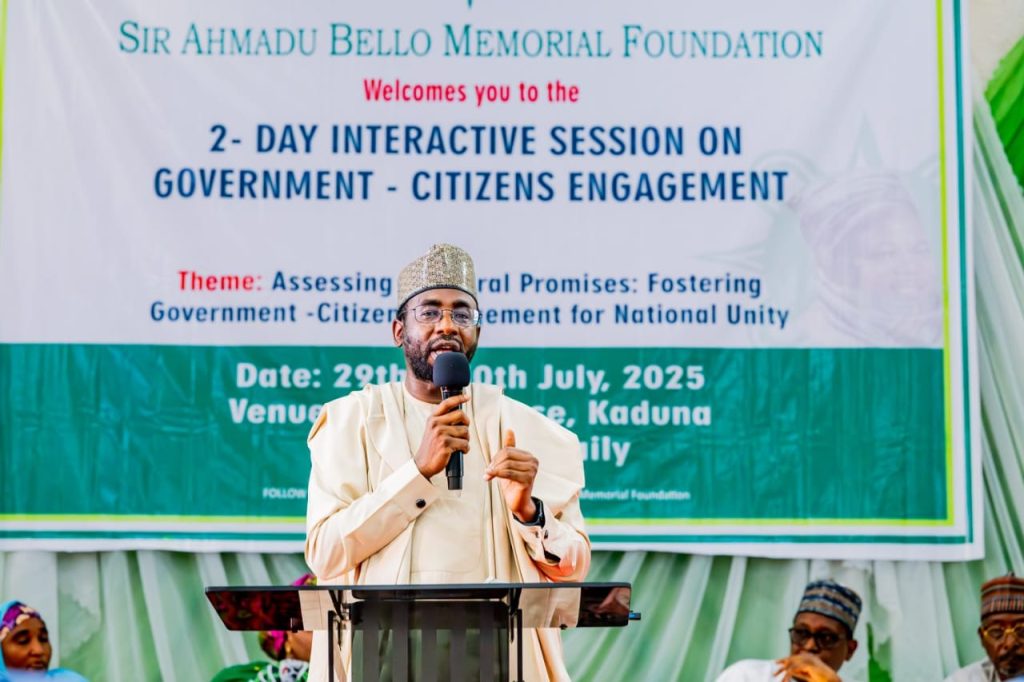
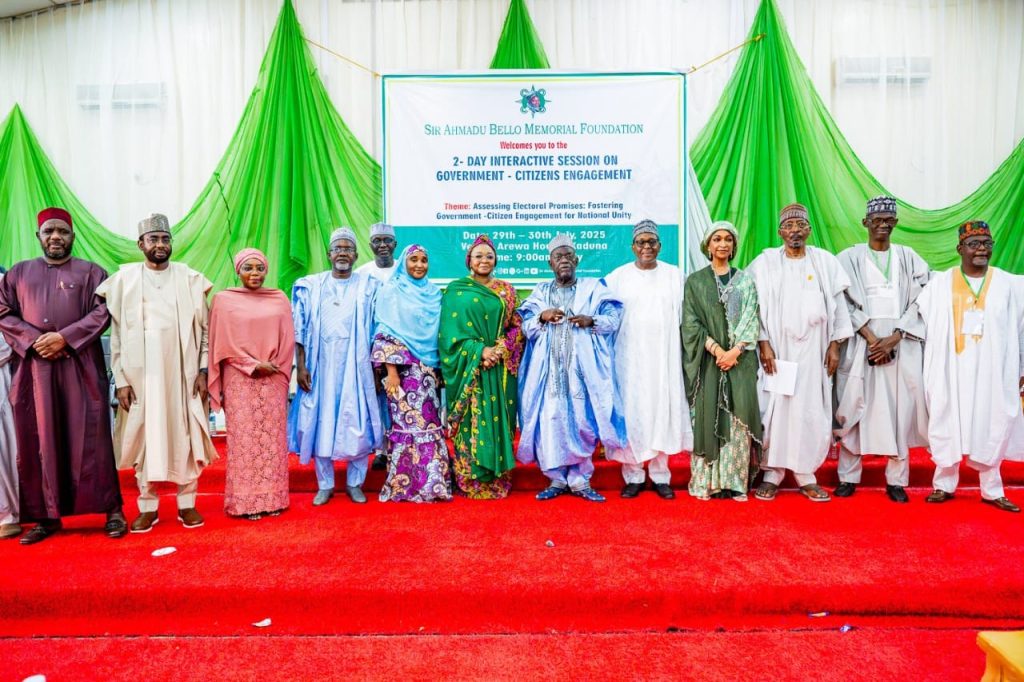
According to a press advisory e-signed by the Director of Corporate Communications and Media Relations at NITDA, Hajia Hadiza Umar, Abdullahi said this while delivering an address at the 2-Day Interactive Session on Government–Citizens Engagement, organised by the Sir Ahmadu Bello Memorial Foundation at the iconic Arewa House in Kaduna, north central Nigeria.
Themed “Assessing Electoral Promises: Fostering Government Engagement for National Unity,” the forum convened high-level stakeholders in government, civil society, academia, and policymakers to reflect on the progress of the Renewed Hope Agenda of President Bola Ahmed Tinubu, particularly in the area of governance delivery and citizen inclusion.
Speaking at the event, Abdullahi emphasised that digital transformation was not only central to achieving the eight priority areas outlined by President Tinubu, but also foundational to uniting the country through equitable access to opportunities.
He described the digital economy as a cross-cutting enabler capable of enhancing productivity across all sectors, from agriculture and education to healthcare and financial services.
According to him, “Digital technology is not a vertical sector, it is pervasive and foundational. It powers everything else and provides a framework for inclusive growth.”
The NITDA boss outlined the Agency’s strategic focus around three key pillars: human capital development, digital infrastructure, and innovation-driven entrepreneurship, noting that the Renewed Hope Agenda had brought renewed vision and energy to Ministries, Departments, and Agencies (MDAs), enabling them to act in concert and foster stronger trust between government and the private sector.
On human capital, he noted that Nigeria’s greatest resource was its people, and developing digital skills at scale was crucial to unlocking that potential. Through initiatives such as the 3 Million Technical Talent (3MTT) programme and the Digital Literacy for All campaign, he said, NITDA had trained over 350,000 individuals in Northern Nigeria since 2023 and explained that the goal was to ensure that by 2027, more than 70 per cent Nigerians would have attained basic digital literacy.
To achieve this, Abdullahi said NITDA was working closely with the Federal Ministry of Education to embed digital skills into the formal education system from kindergarten to tertiary level. He added that partnerships with the National Universities Commission (NUC) were ongoing to ensure digital literacy became part of the general studies curriculum across Nigerian universities.
In addition, the NITDA boss said his agency was collaborating with the National Youth Service Corps (NYSC) to train of corps members annually, who in turn served as digital literacy champions, taking technology skills into rural communities and informal sectors.
Highlighting infrastructure as another critical area, the NITDA boss announced that the Federal Government had approved the deployment of 90,000 kilometers of fiber optic cables across the country to expand broadband penetration.
He also stated that three digital centres were currently being built in each state to ensure that underserved and unserved communities could participate meaningfully in the digital economy. He explained that Northern Nigeria, with its wide coverage and developmental needs, was expected to benefit immensely from this rollout. So far, according to him, 13 IT Community Centres, 101 Digital Economy e-learning Centres and One Cybersecurity Research Centre were established in the last two years.
He also disclosed that the conducive investment climate fostered by President Tinubu’s reforms had sparked renewed interest from global technology companies, with tech giants such as Google and Microsoft bringing significant investments in Nigeria.
Abdullahi announced that Nigeria would host two major global technology events in the coming months, GITEX Nigeria in September and the United Nations’ ICT for Governance (ICEGOV) Summit in November—both of which were expected to attract global innovators and investors.