
By Angeline Mgbele, Bureau Chief, Northern Nigeria & Kingsley I. Ilechukwu, Bureau Chief, South West, Nigeria
The Director-General of the National Information Technology Development Agency (NITDA), Malam Kashifu Inuwa Abdullahi, has said that the transformative potential of emerging technologies is vital in revolutionising trade and investment across Africa.
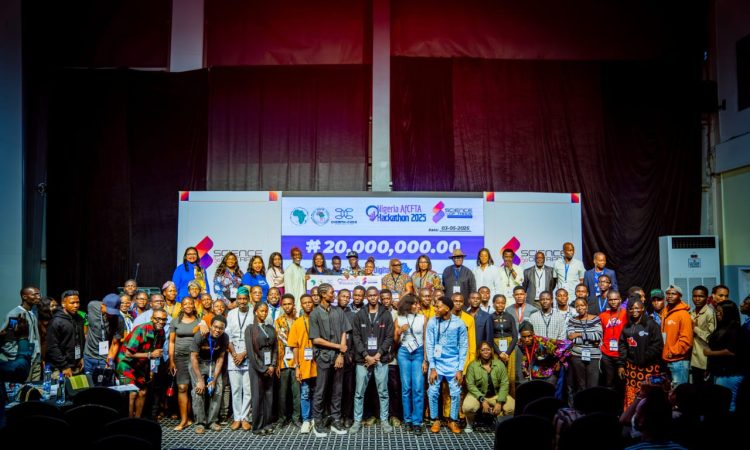
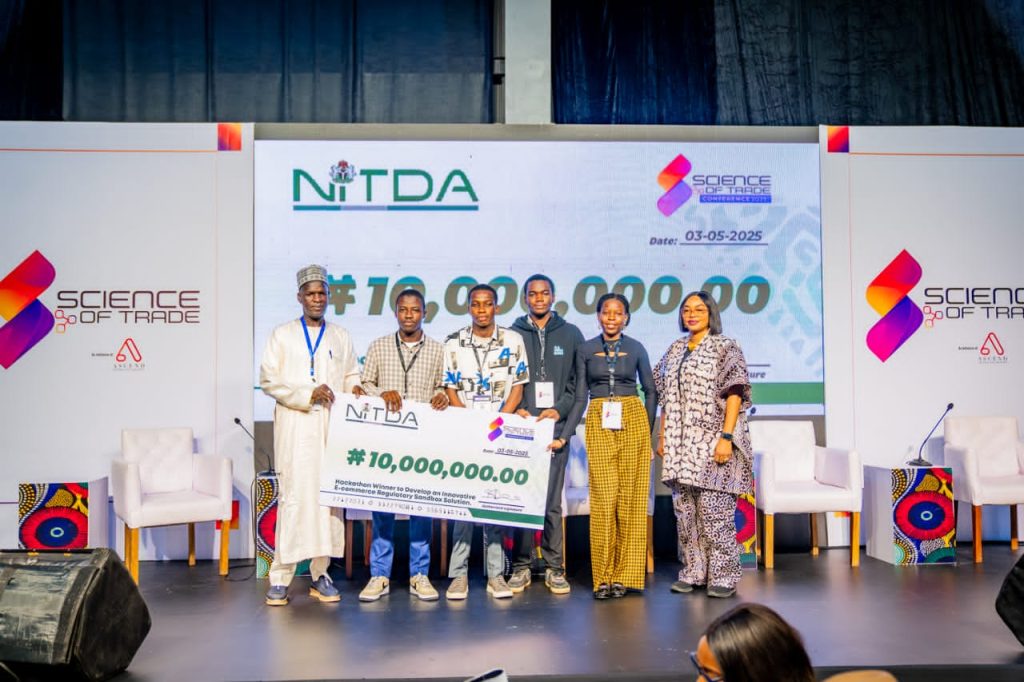
According to a press statement e-signed by the Director of Corporate Communications & Media Relations at NITDA, Hajia Hadiza Umar, Mallam Abdullahi said this while delivering a keynote address at the Nigeria AfCFTA Hackathon 2025, held as part of the Science of Trade Conference in Lagos State, south west, Nigeria, highlighting how digital innovation can drive efficiency, inclusivity, and sustainable economic growth.
Abdullahi who was represented by Director of Digital Economy Development Department, Engr. Salisu Kaka stated that the African Continental Free Trade Area (AfCFTA) was one of the largest free trade zones globally, uniting over 1.4 billion people with a collective GDP exceeding US$3 trillion.
He described the recent adoption of the AfCFTA Digital Trade Protocol as a pivotal milestone that would break down trade barriers, streamline regulations, and open new markets for businesses of all sizes.
“Nigeria, with its population of over 200 million and strong entrepreneurial culture, is uniquely positioned to lead Africa’s digital transformation”, he said.
While pointing out the rise of e-commerce and mobile payments as game changers, the NITDA DG said “From Abuja, I can order products online, conduct due diligence, make payments, and receive deliveries—technology has made trade seamless.”
“This Hackathon arrives at a crucial time following the African Union’s 2024 endorsement of the Digital Trade Protocol. It aims to harmonise digital regulations and eliminate trade barriers across all 54 African nations,” he added.
Abdullahi stressed that while global technological advances had reshaped commerce, many African trade systems were still burdened by outdated procedures, excessive paperwork, and logistical bottlenecks adding that a shift was underway, powered by innovations such as blockchain, AI, IoT, and digital platforms, which were now central to trade operations.
He cited the success of Nigeria Customs Service (NCS) in leveraging technology through the Nigeria Integrated Customs Information System (NICIS II), which automated key processes like declarations, cargo tracking, and risk assessment—leading to a 238 per cent revenue increase between 2017 and 2023. He added that the Unified Customs Management System, introduced in December 2024 as a successor to NICIS II, had already generated over ₦31 billion, showcasing Nigeria’s progress in digital trade facilitation.
As per Abdullahi, the Hackathon was structured around five priority areas: Youth and MSME Inclusion, E-Commerce Adoption, E-Commerce Policy and Trust, Digital Payments, and the E-Commerce Regulatory Sandbox, saying these were sectors where digital tools could significantly enhance trade dynamics.
“I’m confident that the Hackathon will spark innovative, scalable solutions to boost intra-African e-commerce, streamline cross-border transactions, and empower MSMEs with digital capabilities to compete globally,” Abdullahi stated.
He described the event as a springboard for innovations that would simplify payments, promote inclusion, and reinforce Nigeria’s leadership in actualising the AfCFTA digital economy framework.
In his welcome address, National Coordinator of the Nigeria AfCFTA Coordination Office, Dr. Olusegun Awolowo represented by Senior International Trade Policy and Law Expert, Olusegun Olutayo emphasised that transformation was a continuous journey and highlighted the continent’s focus on collaboration, innovation, and inclusive growth as essential to establishing Africa as a hub for digital trade.
Dr. Awolowo reaffirmed the transformative potential of the African Continental Free Trade Area (AfCFTA), emphasising that it presented Africa as a unified market of over one billion people—a vast opportunity for intra-African trade, investment, and economic growth.
He stressed that realising this vision required active participation and shared ownership. According to him, the Hackathon was a tangible mechanism for implementing the AfCFTA Digital Trade Protocol—prioritising inclusion, innovation, and equitable access adding that it was expected to generate actionable solutions that bridged policy and practice, accelerating Africa’s digital economy and empowering the next generation of African innovators.