Call For Abstracts Deadline Extended: International Conference On Emergency Preparedness And Response

By Nayana Jayarajan, IAEA Department of Nuclear Safety and Security
Interested contributors now have until 19 May 2025 to submit abstracts for the IAEA’s International Conference on Emergency Preparedness and Response.
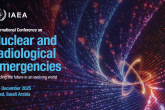
The conference will be held from 1 December to 4 December 2025 in Riyadh, Saudi Arabia and is hosted by Saudi Arabia’s Nuclear and Radiological Regulatory Commission (NRRC). It will provide an international forum where participants can share their experiences and discuss challenges, innovations and the enabling conditions required to strengthen nuclear and radiological emergency preparedness and response (EPR). Participants will include experts from regulatory bodies, emergency response organizations, nuclear operators, technical support organizations, international organizations and more.
Sharing Best Practices in Emergency Preparedness
“This conference provides a unique platform to bring together stakeholders from across the EPR community to discuss best practices, future trends and new technologies to enhance emergency preparedness,” said Director of the IAEA Incident and Emergency Centre, which is organizing the event Carlos Torres Vidal. “By fostering international cooperation and sharing insights, we aim to help countries bolster their emergency response capabilities in a rapidly changing world.”
“Saudi Arabia is privileged to host this significant conference, organized by the IAEA, as part of our ongoing efforts to strengthen nuclear and radiological emergency preparedness nationally, regionally, and globally. Over the years, we have worked closely with the IAEA to advance capabilities and foster international cooperation in this vital field,” said Chief Executive Officer of the NRRC Khalid Aleissa.
“Through this conference, we aim to provide a platform for experts and decision-makers from all organizations involved in emergency response to collaborate, exchange insights, and shape the future of nuclear emergency preparedness and response, ensuring readiness for the challenges of an evolving world,” he added.
IAEA Support as Threats and Technologies Evolve
As the global landscape of nuclear and radiological emergency preparedness and response continues to evolve, anticipating new threats and leveraging emerging technologies are essential. To ensure countries are prepared to respond to nuclear and radiological emergencies, the IAEA develops global safety standards, provides capacity-building support, advises on technological advancements and emergency arrangements and coordinates international response efforts to minimize public health risks during incidents and emergencies.
“As we prepare for an increasingly complex emergency response environment, it is critical that we prioritize safety, security and collaboration,” said Torres Vidal. “This event will address these essential topics and explore how innovative tools and strategies can support EPR in the face of diverse challenges.”
Jordan: Advancing SMR-Powered Desalination
Jordan, where 75 per cent of the land is classified as arid desert, is taking significant steps toward nuclear desalination. The government is exploring Small Modular Reactors (SMRs), compact reactors that could power desalination plants. In 2023, an IAEA team evaluated Jordan’s studies on using SMRs to provide drinking water from the Red Sea to Amman, where water demand is rising.
“Desalination is considered the primary source of fresh water in Jordan to fulfil the expected demand and reduce the supply-demand deficit,” says Commissioner for Nuclear Power Reactors at the Jordan Atomic Energy Commission (JAEC) Khalid Khasawneh. “It offers competitive prices for fresh water to end consumers, in comparison with imported energy sources.”
Saudi Arabia: The Desalination Leader Exploring Nuclear
Saudi Arabia, already the world’s largest desalinated water producer, began exploring the use of nuclear energy for desalination in the late 1970s. As part of its strategy to move from an oil-based economy toward a diversified power production, the country is now considering nuclear plants to achieve its net zero ambitions and meet its long-term water needs.
According to the King Abdullah City for Atomic and Renewable Energy (KACARE), “the Kingdom is planning a sustainable energy mix that includes atomic energy to meet the energy needs of the Kingdom to produce electricity, desalinated water and thermal energy,” which aims to reduce reliance on hydrocarbons and support economic growth.
Egypt: Nuclear Power and Water Strategy
Egypt is also integrating nuclear technology into its water strategy. With the country’s first nuclear power plant, El-Dabaa, under construction, discussions are underway about pairing nuclear energy with desalination in coastal regions. According to the Egyptian State Information Service: “Nuclear energy contributes to enhancing energy security and achieving environmental balance and water security.” As “nuclear facilities can supply the energy required for desalination plants to produce potable water.”
Kuwait: Exploring Nuclear Desalination for Sustainable Water Solutions
Kuwait, which depends heavily on seawater desalination to meet its freshwater needs, is increasingly turning to nuclear technologies to find more sustainable solutions for water and the environment. “Kuwait is facing the effect of climate change, ocean acidification, pollution from the oil and shipping industry, power and desalination activities,” said the Executive Commissioner for International Cooperation at the Kuwait Institute of Scientific Research (KISR) Nader Al-Awadi. In line with its efforts to address these environmental challenges, Kuwait has also established a large-scale facility to carry out research on ocean acidification, aiming to further understand the impacts of changing ocean conditions on marine ecosystems, which are directly tied to the effectiveness of desalination technologies.
Future Prospects
Nuclear desalination requires investments, regulatory frameworks and stakeholder engagement, as for all nuclear installations. The IAEA is working closely with interested governments to advance its safe, efficient and cost-effective implementation.
Continued investment, knowledge-sharing and regional partnerships between the Arab countries exploring nuclear desalination, will be key to success. If widely adopted, nuclear desalination could increase water security in the region for generations to come. Highlighting this growing engagement, Commissioner for Nuclear Power Reactors at the Jordan Atomic Energy Commission (JAEC), Khalid Khasawneh stated: “The IAEA support for Jordan’s nuclear programme, particularly the SMR project, is highly valued and plays a pivotal role in enhancing our capabilities and advancing our endeavors. We eagerly anticipate continued collaboration with the IAEA across all aspects of the peaceful uses of nuclear energy.”
IAEA Technical Lead for Nuclear Non-Electric Applications Francesco Ganda explains: “The non-electric applications powered by nuclear energy, such as desalination, present sustainable solutions for a number of water-intensive endeavours — from the consumption needs of millions of households and the industrial applications of fresh water to agriculture and livestock rearing — that current and future generations will face.”
At the IAEA’s recent cogeneration technical meeting, participants discussed key infrastructure needs for nuclear cogeneration projects. These discussions helped lay the groundwork for an upcoming IAEA document on ‘Specific Infrastructure Considerations for Nuclear Cogeneration Applications’, which will support countries in planning and implementing nuclear cogeneration more effectively. Aligned with broader IAEA efforts, “the initiative was welcomed by experts, especially those engaged in ongoing and planned nuclear desalination projects, as both timely and important,” according to IAEA Associate Nuclear Engineer Maria Elena Domenica Urso.