
Early feedback indicates that FirstNet adoption by law enforcement on bases may be more straightforward than for firefighting counterparts, official says
By Donny Jackson, Editor, Urgent Communications
At least three US military bases are conducting tests this year to explore whether FirstNet broadband can replace aging land-mobile-radio (LMR) systems used to support mission-critical communication for law-enforcement and firefighting agencies on the installation, according to a US Army official.
Public-safety-communications provost marshal/protection directorate for the US Army Installation Management Command (IMCOM), Ernest Calbillo said a lack of funding to upgrade existing LMR communications drove the decision to pursue the tests of FirstNet service, which leverage cellular LTE technology.
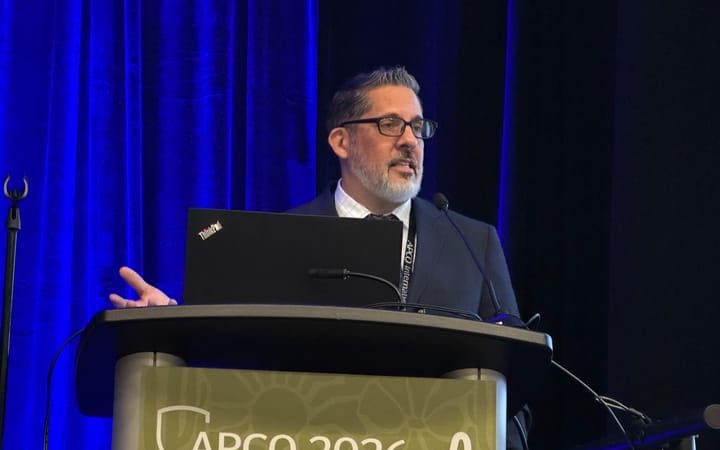
“Land mobile radio is very expensive, and we just do not have the funding to maintain the infrastructure—it’s aging, it’s deteriorating,” Calbillo said during the session. “There’s no one single agency in the Army that wants to claim responsibility for maintaining infrastructure, so we’re looking a testing—through a pilot—the feasibility of transitioning to an LTE infrastructure.
“We’re testing that it’s more cost-effective. We’re testing that we don’t lose any capability with the transition to these type of devices.”
One pilot of the FirstNet service—at the Redstone Arsenal installation in Alabama—is largely complete, Calbillo said. The initial feedback from the Redstone test is that FirstNet service is a viable alternative to LMR, particularly for law-enforcement officers on a military base.
“We learned that, if there is LTE coverage, you can easily use a FirstNet device in lieu of a land mobile radio,” Calbillo said. “It benefits the users to have a single device to be able to use voice and your Intrepid Response capability, rather than using your LMR for voice and your smartphone for your Intrepid capability.”
Transitioning firefighters on a military base to FirstNet for mission-critical communications is proving to be more challenging, according to Calbillo.
“We’re still working on fire emergency services,” he said. “They have NFPA requirements that still have to be met—being able to access buttons and radio knobs while they’re in their bunker gear. Right now, we’re not there yet with the FirstNet device.
“Also, the connections to their headsets while in their bunker is still not there, but we’re working through it right now. That’s still an area of contention.”
Even if firefighters on military bases continue to use LMR devices, Calbillo said he envisions a solution that would allow the US Army to avoid the cost of having to upgrade LMR network infrastructure on the bases.
“The implementation would be sort of a hybrid solution, where firefighters would maintain their LMR, and law enforcement would transition to a FirstNet-enabled device or LTE device—but both would be utilizing the LTE network as the backbone,” Calbillo said.
“Most importantly, it’s more cost-effective—significantly lower costs than maintaining LMR, for the end-user device and the infrastructure.”
Radio-over-IP (RoIP) technology would play a key role under such an arrangement, according to Calbillo.
“RoIP integrations—radio over IP—that’s the future. That’s what we’re looking at right now,” he said. “When it comes to LMR modernizations that are still ongoing, we are testing those RoIP integrations. The pilots will test the RoIP integrtions.
“We think that’s going to solve a lot of the issues we have at garrisons that have poor LMR capabilities. If they have piggyback off of the LTE backbone that’s available there, that could solve a lot of our communications issues, especially at installations that have old, antiquated LMR systems or large training areas.”
Calbillo said two other bases are scheduled to test FirstNet communications for public-safety agencies on their installations later this year. While expressing optimism about the technology capabilities of FirstNet services, he acknowledged that the cultural shift may not be straightforward.
“Bottom line, FirstNet has successfully modernized our public-safety communications effort,” Calbillo said. “One of the slight obstacles is that people love their LMR, and they’re still used to having LMR. So, advocating for that change and letting people know that this is the way we need to go is a little challenging, but it’s something that we feel confident we can work through—especially with the completion of the pilots that we’re hosting at the installations.”