‘Technical Glitches’ Credited To The Electoral Umpire Forced Us To Innovate iVoteAfrica-Castle & Knight Data Architects Ltd Senior Architect

At the Nigeria Innovation Summit 10.0, under the theme: Sustainable Solutions, many solutions were showcased and, fascinating as these solutions were, iVoteAfrica one of these, the brainchild of Castle & Knight Data Architects Limited, demoed on Day One of the summit, literally got every tongue wagging as to why the Independent National Electoral Commission(INEC) has not adopted it as it makes efforts towards integrating technology in improving the electoral process in Nigeria? Senior Data Architect at Castle & Knight Data Architects, Peter Ike spoke exclusively to CLIFFORD AGUGOESI over WhatsApp, on iVoteAfrica’s value proposition.
Cyber Era NG: What inspired you to innovate iVoteAfrica?
PETER IKE: Honestly, it began with people’s frustration. When BVAS and iReV were introduced, there was a wave of excitement and renewed hope about the 2023 general elections. As an IT professional with a background in database management, I was personally curious to see how “electronic” the process would really be.
However, upon getting to my polling unit and being handed a physical ballot paper, I realized the system was still largely manual — from voting to collation and transmission. The term “electronic” felt overstated. After the elections, when the glitches, complaints, and lawsuits began to flood in, I had several discussions with friends about what could have been done differently.
That was when the question arose: What if elections were truly electronic? I said to them, “We can actually build it.” That same night in March 2023, I designed the first database and wrote the first line of code for what eventually became iVoteAfrica. The rest, as they say, is history.

Cyber Era NG : Why have you decided to present iVoteAfrica as a digital voting ecosystem instead of just as a digital voting solution?
PI: Because of its comprehensive nature. Most of what we currently have are isolated digital tools — for example, BVAS is a solution that stops at voter accreditation, while iReV is another that only becomes useful when results are manually scanned and uploaded.
iVoteAfrica, on the other hand, is designed as a complete ecosystem. It manages the entire electoral process end-to-end — from voter accreditation to result declaration. It collates, counts, transmits, tabulates, calculates percentages, and presents results dynamically in real time. In essence, it is not just a tool but a self-sustaining digital ecosystem that can independently power a transparent election.
Cyber Era NG : You witnessed what happened during the 2023 General Elections wherein the electoral umpire alluded to technical glitches as responsible for the delayed uploading of the Presidential election results from the BVAS to the IReV online real time. Does the value proposition of iVoteAfrica adequately remove this bottleneck?
PI: No system is completely immune to failure — hardware can malfunction and networks can go down. However, the strength of iVoteAfrica lies in its all-encompassing architecture and built-in redundancy.
In 2023, we saw a situation where the IReV portal accepted uploads for other elections, but the presidential results couldn’t be uploaded due to what was termed a “technical glitch.” That inconsistency is part of what led many people to question whether it was a genuine glitch or deliberate interference?
With iVoteAfrica, all election results — regardless of category — are written to a single, unified database table. This design means that if a system failure occurs, the process halts uniformly across the board. It’s either all elections are ongoing, or all are paused. The data already written remains intact and verifiable.
This eliminates selective disruptions and ensures a higher level of transparency, integrity, and fairness in the electoral process.
Cyber Era NG : You claim that a unique feature of iVoteAfrica is its hierarchical voting flexibility, which removes the geographical rigidity that currently fuels violence, voter suppression, and logistical failures. What fuels your confidence that the solution would deliver optimally on this promise?
PI: First, let me clarify what we mean by hierarchical voting flexibility. It simply means that eligible voters can cast their votes from anywhere within the jurisdiction of that particular election. For example:
*For a Presidential Election, you can vote from anywhere in the country.
*For a Governorship Election, from anywhere within your state.
*For Chairmanship or Legislative Elections, from anywhere within your local government or constituency.
This flexibility eliminates the need for long-distance travel to specific polling units, thereby reducing voter suppression, violence, and logistical breakdowns.
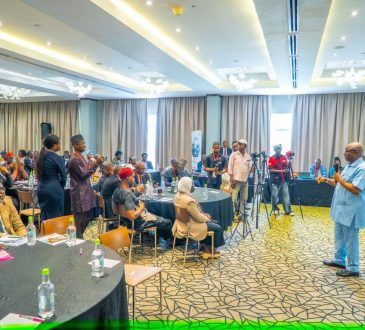
Our confidence in this feature comes from both design and evidence. iVoteAfrica operates online in real time, leveraging the ubiquity and resilience of internet infrastructure. This isn’t just theoretical — it was demonstrated live during the Nigeria Innovation Summit, where participants physically present at the Muson Centre, in Lagos, successfully voted in a simulated Presidential Election “from” different states across the country.
So, it’s not just confidence that it will work — we’ve already proven that it does.
Cyber Era NG : Citizens abroad, courtesy of iVoteAfrica, can participate through designated iVote centres operated by embassies or authorized partners. Give us as sense of the amount of investment in US Dollar terms that you have made into your business in general and iVoteAfrica in particular? With the current government dilly-dallying on naming ambassadors for our various embassies, how might this affect diaspora voting and tell us what you are currently doing to take care of this challenge?
PI: Diaspora voting and early voting for citizens on special duties are part of INEC’s ongoing electoral reform agenda. So, while iVoteAfrica provides the technical capability, the implementation itself remains both a legislative and constitutional matter.
In terms of investment, Castle & Knight Data Architects Ltd, the parent company behind iVoteAfrica, has invested over US$17,000 in research, system architecture, prototype development, and platform testing to bring the solution to its current operational level. However, national deployment — including logistics, data hosting, and diaspora infrastructure — must naturally be government-funded once adoption is approved.
Regarding the delayed appointment of ambassadors, our model anticipates such scenarios. Although the ideal setup involves embassy-operated iVote Centres, we have developed redundant frameworks that allow for diaspora participation through authorized partner institutions and verified international facilities, once legally cleared.
Technically, iVoteAfrica is capable of running on any internet-enabled device, but for electoral integrity, it is deliberately configured to operate only on authorized devices within designated voting locations — whether in embassies, high commissions, or approved partner centres.
This approach guarantees security, controlled access, and transparent participation for citizens abroad, ensuring that diaspora voting can proceed seamlessly once the enabling framework is in place.
Cyber Era NG : How critical are partnerships in your scheme of things and how have these impacted the robustness of iVoteAfrica as a digital voting solution?
PI: Partnerships are absolutely critical to the success and sustainability of iVoteAfrica. Information Technology(IT) is an extensive field, and professionals often specialize in different areas. For a solution as comprehensive as iVoteAfrica, multiple IT disciplines come into play — from database architecture and administration to user interface design, backend engineering, web hosting, visual graphics, and audio integration.
Recognizing this, we have already initiated collaborations across these various technical domains, assembling a multidisciplinary team of experts to ensure that iVoteAfrica is robust, secure, and user-friendly.
Beyond technology, partnerships also extend to civil society organizations, election observers, regulators, development partners, and advocacy groups. These relationships are crucial not only for validation and transparency but also for building public trust and encouraging adoption.
Ultimately, the strength of iVoteAfrica lies not just in its technology but in the ecosystem of partnerships that surrounds and sustains it — and that, we believe, will be the foundation of its long-term success.
Cyber Era NG : Rigging, Human Error, and Violence have characterized our electoral process over time. As you rightly said, current tools cannot technologically prevent rigging or manipulation that arise from human interference and election-day violence but you are assuring iVoteAfrica potentially prevents these by automation, encryption, and its flexible, unpredictable voting model. What gives you the confidence your solution is that error-free?
PI: The confidence comes from the core design model of iVoteAfrica and the hierarchical voting flexibility built into it. The system is engineered much like a strong institution — one that even its creators are subject to.
All data within iVoteAfrica is encrypted end-to-end, which means that not even staff of Castle & Knight nor authorized INEC administrators can alter or manipulate stored election data. This architectural safeguard ensures that every record remains secure, immutable, and independently verifiable.
In terms of human error and violence, iVoteAfrica significantly reduces both. Because voting can take place from any authorized location within the election’s jurisdiction, large crowd gatherings at single polling units — a major trigger for violence — are minimized. Moreover, since ballots are electronically stored, incidents such as ballot snatching, destruction, or multiple bulk voting become technically impossible.
So, while no system is absolutely infallible, iVoteAfrica’s design minimizes human interference and physical vulnerabilities to the barest possible level, creating an electoral environment that is transparent, tamper-resistant, and remarkably secure.
Cyber Era NG : Who are your competitors in the African marketplace and what distinguishes iVoteAfrica from competition products?
PI: Certainly, there are a number of companies across Africa that have developed electronic voting platforms. However, most of these solutions are limited in scope, integration, regulatory compliance, flexibility, and data security. Many are primarily designed for small-scale applications such as student elections, organizational polls, and award voting.
iVoteAfrica, on the other hand, was conceived and developed as a national-grade electoral infrastructure — not just a digital voting tool. It is fully scalable, institution-oriented, and compliant with the structural and legal realities of government-administered elections. Its distinguishing strengths include:
*End-to-end integration — covering the entire process from accreditation to results declaration.
*Hierarchical voting flexibility, which eliminates geographical rigidity and mitigates violence and voter suppression.
*Advanced encryption and redundancy, ensuring total data integrity and system resilience.
*Pan-African scalability, allowing adaptation to different electoral laws and connectivity realities across the continent.
In essence, while other platforms offer digital voting solutions, iVoteAfrica represents a digital electoral ecosystem — comprehensive, secure, transparent, and built for institutional trust.
Cyber Era NG : You demoed iVoteAfrica at the Nigeria Innovation Summit X. How have the takeaways from that summit contributed to the-time-to-market projection?
PI: The Nigeria Innovation Summit provided an invaluable opportunity to showcase iVoteAfrica to a diverse audience comprising government officials, investors, technologists, and innovation leaders. The feedback we received from this engagement was both encouraging and insightful. It validated the relevance of our solution while highlighting key considerations around scalability, stakeholder engagement, and regulatory adoption.
As a result, we have refined certain aspects of the user interface, enhanced the system’s real-time performance metrics, and initiated discussions with potential partners to strengthen our go-to-market framework. These engagements have significantly shortened our time-to-market projection by helping us align technical development with institutional and regulatory expectations early in the process.
In summary, the Summit confirmed that iVoteAfrica is both timely and technically ready, and that with the right partnerships, national-level deployment can be achieved faster than initially projected.

Cyber Era NG : How critical are the media in the iVoteAfrica marketing plan?
PI: The media play a pivotal role in our marketing and public engagement strategy for iVoteAfrica. Beyond product visibility, the media serve as a crucial bridge for public education, stakeholder sensitization, and trust-building — all of which are fundamental to the adoption of a digital voting ecosystem.
Given the sensitivity of elections and the historical skepticism around technology in governance, our strategy deliberately prioritizes transparent communication through mainstream, digital, and social media platforms. We view the media not merely as a publicity tool, but as an institutional partner in shaping public perception, clarifying misconceptions, and promoting informed participation in the democratic process.
In essence, for iVoteAfrica, the media are not peripheral to our marketing plan — they are central to our credibility, acceptance, and long-term success.