
Mexico, Latin America’s second largest economy, still requires significant investments in infrastructure and workforce training for the telecommunications sector, but the sector is growing rapidly.
Despite the relatively high spectrum costs compared with other markets in the region, as well as restrictive regulations for the deployment of telecom infrastructure, regulator IFT expects all of the main segments of the market to expand this year.
Roughly 1.3mn net mobile lines were added during the first quarter of this year, up 5.3 per cent year-on-year, taking the country’s total base to 133mn mobile lines.
In January-March, the revenues of companies in the sector climbed 3.4 per cent to 129bn pesos (US$6.5bn), according to consultancy the Competitive Intelligence Unit (CIU), while GDP grew 1.6 per cent in the same period.
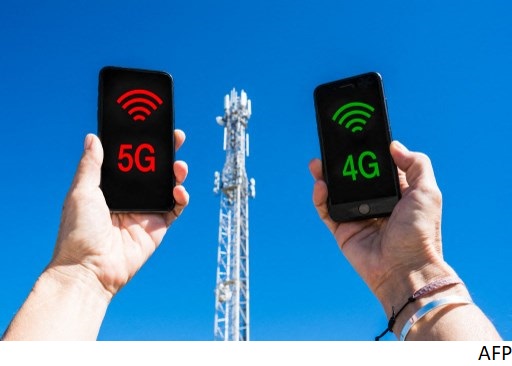
The big mobile carriers such as América Móvil and AT&T have turned their focus to 5G and plan to gradually roll out these services across cities while continuing to push 4G.
“We see a great opportunity in Mexico for manufacturing and factories,” AT&T México CTO, Nicole Rodriguez van den Branden, said about 5G opportunities at an event sponsored by the group in May.
According to research firm IDC, 5G could account for about 25 per cent of the Mexican mobile base by the end of 2025.
In fixed operations, the country has seen investments grow in fiber optics networks, antennas, corporate services and even datacenters in booming regions such as Querétaro, Monterrey and Mexico City.
BNamericas takes a look at how and where some of the major players are investing.
AMÉRICA MÓVIL
América Móvil announced capex guidance of up US$8bn for this year, which is in line with the figure invested in 2021. That figure comprises all of its geographies and resources will be focused on 5G, fixed broadband and corporate services.
In 1Q22, capex reached 28.6bn pesos (US$1.37bn), up from 25bn pesos in 1Q21.
The group’s Mexican subsidiary, mobile market leader Telcel, launched commercial 5G services in February. Its network went live in 18 localities after IFT approved a concession change to use spectrum bands in the 3,450-3,550MHz segment (3.5GHz) to offer 5G.
In a Q1 earnings call, CEO Daniel Hajj said Telcel plans to reach 120 cities with 5G coverage by the end of this year. The latest city to get 5G was Tampico in Tamaulipas state, where the signal was activated last month.
The company is also planning to double the number of 5G cell sites to 5,000 by year-end, most of which are being provided by Ericsson and Huawei.
The overall investment forecast for the first year of 5G in Mexico is US$1.8bn.
On the fixed side, COO Oscar Von Hauske said in the earnings call that América Móvil had a “very aggressive program for fiber in Mexico,” targeting 2.8mn homes passed this year.
By the end of Q1, around 54 per cent of its fixed line subsidiary Telmex’s customer base comprised fiber broadband clients. The company ended the quarter with 10.1mn fixed broadband clients, with around 5.45mn FTTH customers.
The group’s investments are not expected to significantly increase its debt, which could be partially offset by divestments or reducing spending in non-core areas.
Fitch expects América Móvil’s net debt/Ebitda ratio to decline to 1.6x in 2022, compared with 1.9x in 2021 and 2.1x in 2020.
The improvement is mainly due to the group spinning off US$2.7bn of debt with tower assets and its strong Ebitda growth, according to the ratings agency.
Last month, Telmex also won a tender to provide Wi-Fi services to Felipe Ángeles international airport (AIFA), beating bids from TotalPlay and Operbes.
TELEFÓNICA
Telefónica México has been prompted to return some frequencies due to high spectrum costs, and it is doubling down on its cost-cutting by operating as an MVNO using the network of AT&T, with whom it maintains an infrastructure-sharing agreement.
As of end-March, close to 80 per cent of its traffic had already been migrated to the AT&T network.
Full migration is expected to take place by the end of this month, after which the company expects to return its lots in the 1.9GHz and 2.5GHz bands to IFT, spectrum it deems less profitable.
Telefónica also relies on roaming agreements with Telcel for areas where it does not have proprietary networks.
But with limited spectrum in hand – Movistar had less than 10 per cent of the radio spectrum as of the end of 2020, according to the IFT, compared with 43.1 per cent and 41.3 per cent for Telcel and AT&T – there is little the company can do to offer competitive mobile networks.
Unlike its main competitors, Telefónica has not yet defined a 5G investment plan. It is assessing the deployment of the technology, balancing legislative, regulatory, competition and implementation factors.
The Spanish group has been cautious with investments in markets such as Mexico, where its position is less favorable.
Telcel dominates the mobile market with a share of more than 60 per cent, while AT&T, which entered the Mexican market in 2015, continues to narrow the gap to Telefónica, reaching a share of more than 15 per cent at end-2021, just 3 percentage points behind Telefónica.
The infrastructure-sharing agreement with AT&T also allows Telefónica not to have to worry about 5G. The company has already hinted that it could expand its deal with the US group and use AT&T’s network to deliver 5G to its own customers in certain areas.
How this would be commercially viable is unclear, not least because a significant portion of the company’s customer base in Mexico comprises price-sensitive, low-ARPU prepaid users.
In 2021, Telefónica invested 22.7mn euros (US$24.3mn) in the country, over three times more than in 2020, but that is still well below the annual capex levels of Telcel, for example.
In the first three months of the year, Telefónica México’s revenues grew 0.4 per cent year-on-year, driven by a recovery in prepaid and 17 per cent growth in postpaid.
AT&T
After a partial network activation in December, AT&T debuted commercial 5G services in Mexico City, Guadalajara and Monterrey at the end of May, with plans to launch in 25 cities by year-end.
The US group does not give details of its investment plans for Mexico or Latin America, where it recently sold its DTH pay-TV division Vrio to Argentina’s Werthein group.
AT&T reported total revenues of US$38.1bn for the first quarter, down 7 per cent year-on-year, and capex of US$4.7bn, mostly spent on 5G and fiber.
The company had 20.5mn wireless users in Mexico at end-March, up from 19mn in March 2021. During the first quarter of this year, AT&T México saw postpaid net adds of 3,000 users and prepaid net adds of 178,000.
Together with the December 5G activation, the company opened a research center in the country to bring together the public, private and educational sectors to foster the development of 5G solutions, test applications and validate technologies.
Recently, it also launched a fund to support the development of projects by startups and local entrepreneurs based on 5G technology.
TELEVISA
The leading pay-TV provider in Mexico, with a market share of over 60 per cent, and the second-largest fixed broadband operator, with 26 per cent of users, media group Televisa invested around US$229mn in property, plant and equipment in Q1 and plans to invest another US$867mn in the rest of the year.
In 2021, this spending amounted to 22.5bn pesos, up from 19.7bn pesos in 2020 and 18.8bn pesos in 2019, according to the company’s annual financial reports.
The group’s cable subsidiaries, Cablevisión, Cablemás and Telecable, recorded a consolidated total of 6.4mn subscribers and 17.9mn homes passed by end-2021.
In Q1, the group’s revenues were up 3.3 per cent to 18.6bn pesos, driven by increased sales in its cable and other business segments.
Sales of the Sky satellite DTH television service fell 6.2 per cent, while cable sales were up 1.1 per cent, with over 336,000 customer additions.
MEGACABLE
Fixed telecoms operator Grupo Megacable invested 2.34bn pesos in Q1, up 24.8 per cent year-on-year, which helped push its homes-passed fiber base to 9.68mn households, a 7.5 per cent increase.
In 2021, capex amounted to 9.46bn pesos, up from 8bn pesos in 2020, a figure that Megacable said it allocated mainly to network construction and modernization.
The group’s fiber network grew by 5.4 per cent year-on-year in Q1, reaching 67,100km.
As of March 31, Megacable had around 4.2mn unique subscribers for a total of 10.5mn revenue generating units (RGUs), up 4.8 per cent and 7.9 per cent, respectively.
Of the 10.5mn total, 3.8mn were internet accesses, 3.5mn video accesses and more than 3mn were fixed-line accesses.
The company also announced at the end of May that it aims to raise 7bn pesos from the sale of stock certificates to finance its operations, accelerate investment projects and refinance existing debt.
The issuance will be the company’s first in the local market and is due to take place on July 12.
TOTALPLAY
Mexican triple-play operator Totalplay, owned by Grupo Salinas, invested 5.13bn pesos in property, plant and equipment in Q1, up from 3.83bn pesos in the same quarter of 2021.
The company is investing to extend its FTTH coverage to provide broadband, IPTV and telephony services.
Demand for its services boosted net revenues by 38 per cent year-on-year to 8.41bn pesos in the quarter.
The company also posted a net profit of 477mn pesos in 1Q22, reversing a net loss of 216mn pesos in the same period of last year.
CFE TEIT
State-run CFE Telecomunicaciones e Internet para Todos (CFE TEIT) announced this week that it would invest 15.5bn pesos in two nationwide connectivity projects.
The first involves the development of a public network to take affordable 4G to around 6mn Mexicans in 26,000 areas, including 173 municipal capitals, where there is a lack of technology or it is insufficient. The capex earmarked for this initiative is 8.71bn pesos.
The second project is a national “aggregation” network, that is, infrastructure that can connect users to a provider with available coverage in a given geographic area.
Capex is 6.85bn pesos, and the goal is to benefit 62mn people in 3,000 areas, including 15,500 entities such as hospitals, schools, welfare banks, telecom centers and federal offices.
The funds outlined for this project will be used mostly for fiber optics equipment, according to CFE TEIT.