
By Melissa Evans, IAEA Department of Technical Cooperation and Felicia Dragolici, IAEA Department of Nuclear Energy
Over the last two years, the IAEA has trained more than 200 experts in Europe and Central Asia to manage radioactive waste safely and securely, helping countries develop long term solutions that are tailored to their national circumstances.
Radioactive waste is generated from a wide range of nuclear applications and countries are fulfilling their responsibilities to ensure safe management throughout the entire lifecycle, from generation, characterization, treatment, conditioning and storage through to its eventual disposal in licensed disposal facilities.
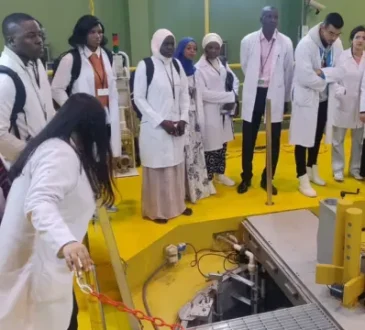
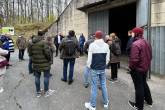
Over the last two years, country representatives completed practical exercises and technical site visits, travelling to sites across Europe to see firsthand how other countries have addressed similar waste management situations successfully.
Learning from Lithuania’s Decommissioning Experience
Countries in Europe and around the world face similar challenges in radioactive waste management, including legacy waste, ageing storage facilities and a lack of disposal facilities. These common challenges mean that they can benefit directly from each other’s experiences and expertise. For instance, a specific kind of facility to store or dispose of radioactive waste from nuclear applications, known as a RADON-type facility, was constructed in parts of Europe from the 1960s to the 1980s. These facilities share design similarities.
“Across Europe, countries are facing common challenges related to developing proper radioactive waste management infrastructure, dealing with legacy waste and sites and establishing an adequate legal framework,” said Head of the IAEA’s Waste Technology Section Nora Zakaria. “Through technical support and expert guidance, the IAEA is supporting these countries to address challenges and develop safe, sustainable solutions for radioactive waste management, decommissioning and environmental remediation,” Zakaria added.
Lithuania’s Maišiagala radioactive waste storage facility, a former RADON-type facility, was successfully decommissioned in 2026 and its radioactive waste was removed. To complement a workshop in 2026, the IAEA supported the travel of regional experts to the Maišiagala site and the Ignalina nuclear power plant where the retrieved radioactive waste was transferred. Lithuanian experts involved in the decommissioning shared practical lessons that could be adapted to address similar challenges related to ageing storage facilities in their countries.
The same approach will be followed in the Republic of Moldova, where the IAEA has supported several activities related to infrastructure preparation, staff training and the development of technical documentation. These activities were carried out to facilitate the implementation of waste retrieval, characterization, sorting, packaging and safe storage from Moldova’s RADON facility.
“The workshop in Lithuania was particularly valuable for us because it provided an opportunity to learn directly from a country that has successfully addressed challenges very similar to those we face in the Republic of Moldova,” said Director of the Radioactive Waste Management Company of the Republic of Moldova Lulian Gisca. “Seeing how radioactive waste was retrieved from the Maišiagala facility, characterized, sorted, packaged and transferred for subsequent management gave us practical insights that we can apply when preparing our own activities. The knowledge gained, together with the technical support and training provided by the IAEA, is helping us to better plan the retrieval of legacy radioactive waste from our RADON-type facility and to ensure that each step is carried out safely in a manner consistent with international good practices,” Gisca said.
Georgia Shares Expertise Across Europe
Regional collaboration is allowing countries that once received capacity building support from the IAEA technical cooperation programme to share their expertise in waste management with other countries in the region: by hosting technical cooperation fellows at their facilities, and by providing technical support through expert missions.
Georgia has built considerable infrastructure and expertise with IAEA support. The country is now helping others in the region to tackle legacy waste and disused sealed radioactive sources. From 2024 to 2026, Georgia hosted scientific visitors from Azerbaijan, Romania, Serbia and Tajikistan, focusing on the management of disused sealed radioactive sources. In 2025, Georgian experts travelled to Serbia to support the cold trial and hot trial runs at the Public Company Nuclear Facilities of Serbia, held as part of the licensing process for Serbia’s radioactive waste processing facility.
“Ten years ago, I participated in the IAEA technical cooperation programme as a fellow, gaining knowledge and practical experience in radioactive waste and disused sealed radioactive source management,” said Vladimer Tvaliashvili from the Georgian Agency of Nuclear and Radiation Safety. “Today, I have the opportunity to share that experience with colleagues from other countries facing similar challenges. This shows the long-term value of capacity building: the knowledge gained through IAEA support remains in the country, develops through practical application and can ultimately be shared across the region,” Tvaliashvili added.
Fostering a Regional Community of Experts
In addition to strengthening technical knowledge, IAEA support has helped to build a regional community of trained professionals working in radioactive waste management. Participants have developed long-lasting professional relationships while attending workshops, scientific visits and expert missions that continue after official activities have concluded. These connections have led to bilateral exchanges between countries facing similar challenges, enabling experts to explore potential solutions together. Specialists from Lithuania, the Republic of Moldova and Ukraine, for example, have remained in contact and continue to exchange experience and discuss practical issues related to legacy radioactive waste and ageing storage facilities.
IAEA-led networks such as LABONET and DISPONET support ongoing collaboration by connecting waste management specialists from around the world. These networks serve as formal platforms for knowledge exchange and support, helping countries to characterize and dispose of radioactive waste in line with international safety standards.
“One of the key roles and strengths of regional technical cooperation is the opportunity for peer-to-peer learning. By exchanging expertise, practical experiences and lessons learned, countries can build on proven approaches in the region to develop their own solutions to national radioactive waste management challenges,” said Section Head in the IAEA Technical Cooperation Division for Europe Sandra Steyskal.
As the safe management of radioactive waste requires sustained commitment over decades, building technical expertise is essential to implementing long term solutions. By supporting learning between peers and practical training, the IAEA is helping countries worldwide, including in Europe and Central Asia, to address challenges related to radioactive waste management and to plan for future programmes.