
By Angeline Mgbele, Bureau Chief, Northern Nigeria
The Director‑General, National Information Technology Development Agency (NITDA), Mallam Kashifu Inuwa Abdullahi, has underscored the central role of policy as an enabler of Nigeria’s digital transformation.
This is according to a press statement e-signed by the Director of Corporate Communications & Media Relations at NITDA, Hajia Hadiza Umar.
Speaking during a panel session at the IoT West Africa Conference on the theme “The Lagos‑Abuja Digital Corridor: Building Africa’s Next Data Centre and Cloud Hub”, Mallam Abdullahi, who was represented by Director, Stakeholders Management and Partnership Dr. Aristotle Onumo, emphasised that while infrastructure responded to demand, policy remained the critical driver that created an enabling environment for sustainable digital growth.
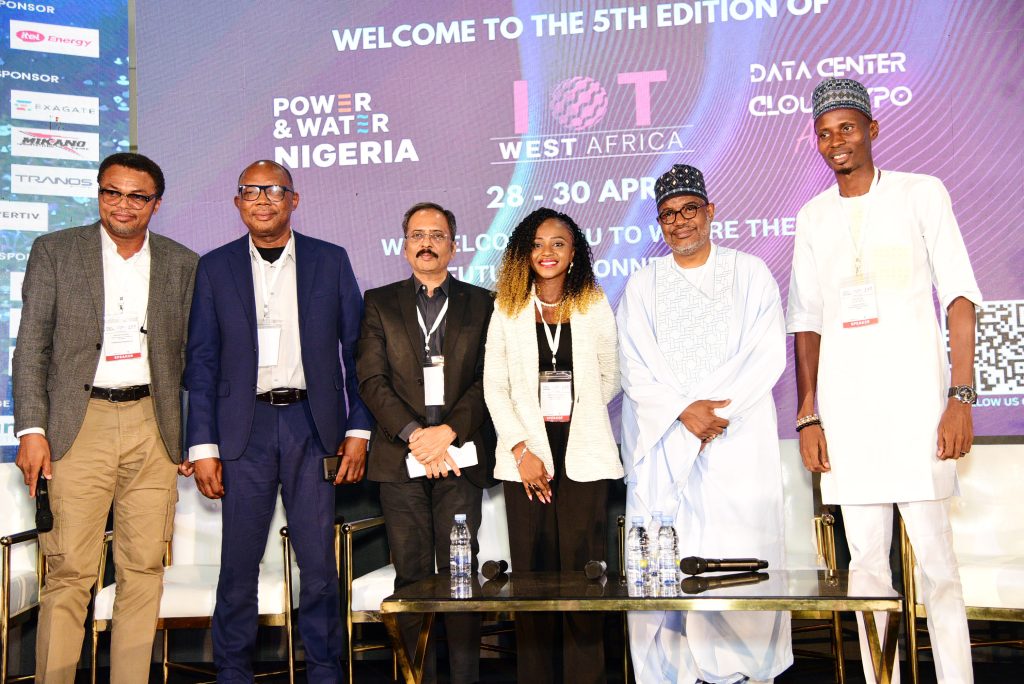
IoT West Africa is a premier platform that brings together industry leaders, policymakers, and innovators to explore advancements in Internet of Things, (IoT) smart cities, Artificial Intelligence, Cloud Computing, and Digital Transformation.
He explained that Nigeria’s broadband policy, which stipulated minimum speeds of 10 Mbps for rural areas and 25 Mbps for urban centres, provided a strategic framework for prioritising infrastructure deployment along the Lagos‑Abuja digital corridor. He cautioned, however, that without deliberate collaboration and partnership between government, the private sector, and civil society, widespread infrastructure rollout would remain challenging. “Collaboration is the pathway that massifies impact, while partnership harnesses collective intelligence. No one can achieve this in isolation,” he said.
Dr. Onumo also spoke on the Nigerian Sovereign Cloud Project; a flagship initiative aimed at strengthening indigenous cloud service providers and preventing the dominance of Nigeria’s digital infrastructure by foreign hyperscale operators.
By scaling local infrastructure to meet global standards, the project seeks to domesticate data hosting, reduce operational costs, and improve access to cloud services across the country.
He further stressed that policy must not only enable infrastructure development but also stimulate demand. As an example, he cited the consolidation of servers by government agencies, which created significant demand for cloud services and, in turn, drove investment in data centres. He emphasised the importance of public‑private partnerships (PPP) in co‑creating, co‑owning, and co‑delivering data centres and digital services.

“We are no longer looking at IT from the perspective of infrastructure alone, but as an integrated system that creates value for the people,” Onumo said.
He called on stakeholders across sectors to work with NITDA in building a digital Nigeria, stating: “If we must achieve our mission, we need you, and you need us. Together, we can make Nigeria a digitally enabled nation, fostering inclusive economic development through technological innovation.”
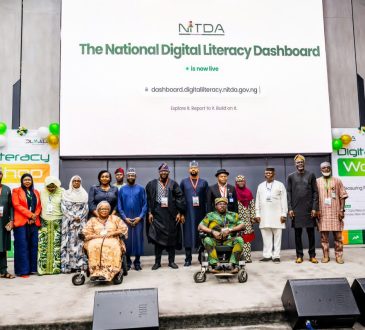
Highlighting NITDA’s strategic action plan, Onumo referenced initiatives such as the Digital Literacy for All programme, which aims to ensure that 70 per cent of Nigerians acquire digital skills by 2027. Through partnerships with the National Youth Service Corps (NYSC), he noted that NITDA is deploying digital literacy champions across Nigeria’s 774 local government areas, with a target of training 30 million Nigerians within three years. “That is the power of collaboration and partnership,” he added.

In his remarks, National Commissioner/CEO of the Nigeria Data Protection Commission (NDPC), Dr. Vincent Olatunji, while delivering the Day 2 keynote speech stressed the importance of safeguarding Nigeria’s digital economy through strong data protection and privacy frameworks.
He highlighted data sovereignty, the growing role of data centres, and regulatory expectations under the Nigeria Data Protection Act, 2023, noting both the benefits of compliance and the risks of non-compliance. Dr Olatunji stated that data centres were now critical infrastructure for Nigeria’s digital transformation.
While decrying that over 90 per cent of the Nigeria’s data was hosted abroad which was precarious for the nation’s sovereignty, he encouraged for more investment in the sector as it was projected to reach US$1.9 billion by 2031.