IAEA Reviews Progress Of Uzbekistan’s Nuclear Power Infrastructure Development

Uzbekistan has made significant progress in developing the infrastructure needed for the implementation of a nuclear power programme, an International Atomic Energy Agency (IAEA) team of experts has found.
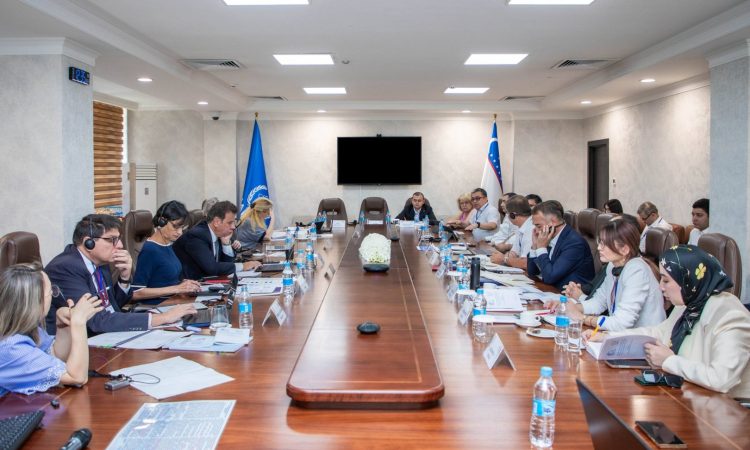
The conclusion followed an IAEA Follow-up Integrated Nuclear Infrastructure Review (INIR) mission, carried out at the request of the Government of Uzbekistan from 22 to 26 June, which reviewed progress in addressing recommendations and suggestions from a 2021 Phase 2 INIR mission. Phase 2 missions assess the country’s preparedness for implementing a nuclear power project.
In 2018, Uzbekistan decided to develop a nuclear power programme to help meet growing electricity demand and diversify its energy mix. The country’s current plans include two RITM-200N type small modular reactors (SMR) and two VVER-1000 type large reactors. In June this year, IAEA Director General Rafael Mariano Grossi attended the first concrete pouring ceremony marking the start of construction of the first SMR unit, which is expected to become operational around 2029.
The INIR team, comprising two international experts from Brazil and Türkiye and two IAEA staff, assessed the progress made in areas such as the legal and regulatory frameworks, nuclear safety, security and safeguards, human resource development, stakeholder engagement and environmental protection.
The INIR team concluded that Uzbekistan has made significant progress. It has joined the relevant international legal instruments, revised its national nuclear legislation, and developed its regulations for licensing and oversight, management systems and the necessary electrical grid studies and enhancement plans.
“Uzbekistan has demonstrated commitment to develop a safe, secure and sustainable nuclear power programme”, said mission team leader John Haddad, of the IAEA’s Nuclear Infrastructure Development Section. “It has worked actively to address the recommendations and suggestions from the 2021 mission and develop a sound infrastructure for the implementation stage of its programme”.
The team said that further work is needed to complete ongoing actions to strengthen the nuclear regulatory body and finalize feasibility studies.
The mission was hosted by the Atomic Energy Agency under the Cabinet of Ministers of the Republic of Uzbekistan (Uzatom), with participation from more than 20 national organizations involved in the nuclear power programme.
“The INIR Phase 2 Follow-up Mission is of particular importance to us”, said Uzatom Director Azim Akhmedkhadjaev. “We see it as a vital tool for open professional dialogue, allowing us to objectively assess the ongoing work to develop our national nuclear infrastructure, compare the results achieved with international standards and IAEA recommendations, and identify further practical steps.”
The preliminary mission report was delivered to the Government of Uzbekistan at the end of the mission.
The IAEA has supported Uzbekistan’s nuclear power programme over several years through technical cooperation, expert missions, workshops and training activities. The results of this mission will help inform future cooperation and capacity-building efforts.