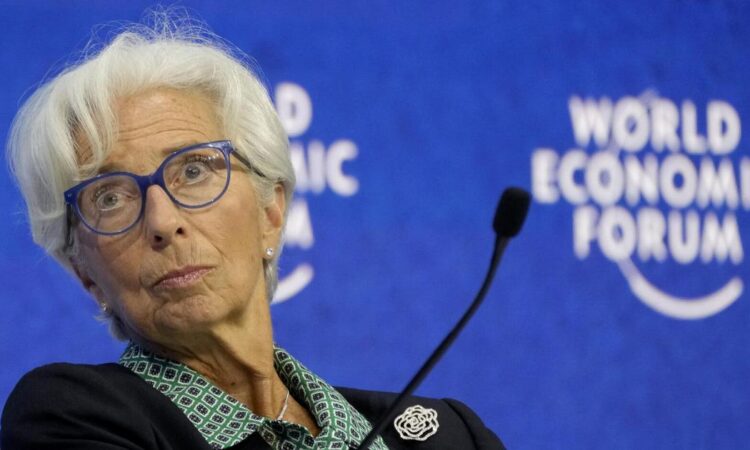

The European Central Bank will raise interest rates next month for the first time in 11 years and add another hike in September, catching up with other central banks worldwide as they pivot from supporting the economy during the COVID-19 pandemic to squelching soaring inflation.
The surprise move Thursday marks a turning point after years of extremely low interest rates but faces risks from weakening prospects for economic growth. Russia’s war in Ukraine has sent shock waves through the global economy, particularly as energy prices have soared and clobbered Europe, which relies on Russian oil and natural gas.
“Russia’s unjustified aggression towards Ukraine continues to weigh on the economy in Europe and beyond,” bank President Christine Lagarde told reporters. The war is “disrupting trade, is leading to shortages of materials and is contributing to high energy and commodity prices.”
The bank’s 25-member monetary policy council, which met in Amsterdam, said inflation had become a “major challenge” and that those forces had “broadened and intensified” in the 19 countries that use the euro currency. Consumer prices rose by a record 8.1 per cent in May. The bank’s target is 2 per cent.
The ECB will first end its bond purchases that buoy the economy and then raise rates by a quarter-point in July. It left open the possibility that it would make a more drastic, half-percentage-point increase in September, saying that if the inflation outlook persists or deteriorates, “a larger increment will be appropriate.”
The US Federal Reserve raised its key rate by a half-point May 4 and has held out the prospect of more of those larger increases. The Bank of England has approved rate hikes four times since December.
The bar to a half-point hike in September “has been set very low,” said chief economist and global strategist at ADM Investor Services International, Marc Ostwald.
How far the bank will go after that is harder to tell, said global head of macro at ING bank, Carsten Brzeski.