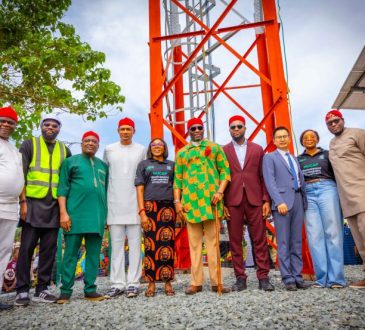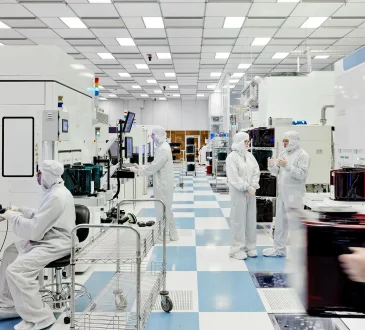

Huawei has either completed or is building multimillion-dollar data centres and cloud services in many African countries, including Zimbabwe, Senegal, Zambia, Togo, Tanzania, Mozambique, Mali and Madagascar.
The Chinese tech giant is also powering 5G in Africa, while the current African 4G infrastructure depends to a large extent on support provided by Huawei.
Equipment for the Peace cable is being supplied by HMN Tech (formerly Huawei Technologies Co. Marine).
Washington has in recent years banned Huawei and some Chinese companies and added them to its commerce department “entity list”, citing national security and foreign policy concerns over China’s alleged attempts to monopolise networks and use them for espionage.
When the Trump White House unveiled a “Clean Network” initiative in 2020, to safeguard US “citizens’ privacy and companies’ most sensitive information from aggressive intrusions by malign actors, such as the Chinese Communist Party”, several European nations and tech companies signed up to allow “only trusted vendors” in their 5G networks.
Huawei has denied those allegations, and Beijing rejects claims that it takes part in industrial espionage.
The US has been dissuading African countries from using Chinese technology over similar concerns. In Angola, for instance, it is sponsoring the expansion of 5G access with “trusted technology components”, as American diplomats put it.
In May, while on a trip to Angola, US Deputy Secretary of State Wendy Sherman warned that, “when countries choose Huawei, they are potentially giving up their sovereignty. They are turning over their data to another country.”
Her comments raised hackles in Beijing, with foreign ministry spokesman Zhao Lijian saying “groundless and denigrating remarks about China only serve to expose the US’ malicious attempt to contain China and sow discord in China-Africa cooperation”.
“There is not a single case of cyber security accident, surveillance or wiretapping in the course of the cooperation [in Africa],” Zhao said. He added that, under the Global Initiative on Data Security put forward by China, “we explicitly urge IT companies not to install backdoors in their products and service”.
The US administration has long expressed security concerns about the increasingly dominant position of Chinese firms, including Huawei and ZTE, in providing radio access network technology across Africa. Under the PGII umbrella, G7 governments are expected to incentivise their telecoms companies to expand in the expanding African markets.
Geo-economic competition in Africa is rapidly becoming concentrated in the IT sector, according to Eyck Freymann, author of One Belt One Road: Chinese Power Meets the World, and Indo-Pacific director at Greenmantle, a macroeconomic advisory firm.
“The US government clearly recognises that it must do more to compete with China in the tech sphere in Africa,” Freymann said.
“While it will never be able to match Chinese investments dollar for dollar, Washington will look for a few high-profile projects to support that highlight the United States’ unique strengths and selling points.”
He said Africa still suffers from a vast infrastructure deficit in terms of telecoms and broadband. “Whichever superpower claims a competitive edge in providing this infrastructure will enjoy wide-ranging strategic benefits in the years to come.”
Director of the Stimson Centre’s China programme in Washington, Yun Sun said that digital space and IT have become a focus of US-China rivalry in Africa, with Chinese digital dominance a particular concern.
“Some would say it is already too late for the US to launch into this field because China has been working in this space for decades building infrastructure. But looking down the road and the potential division in cyberspace, it is necessary for the US to be in the game,” Sun said.
“I think it offers Africa at least an alternative to what China has provided.”
“[However,] it raises questions about the future – whether the African continent will be divided into two digital spheres that are decoupled from each other for security concerns,” he added.