As Nigeria Faces Sustainability Paradox, IXPN Boss Urges Industry To Build Green Before It’s Too Late

Future-Proofing Nigeria: IXPN boss urges ‘Green Procurement’ for digital infrastructure
By Kingsley I. Ilechukwu, Bureau Chief, South West, Nigeria
As Nigeria’s digital ecosystem experiences explosive growth, the Internet Exchange Point of Nigeria (IXPN) has issued a critical warning to the Information and Communications Technology (ICT) sector: the rush to expand connectivity is creating a “sustainability paradox” that could bury the nation in toxic electronic waste if not immediately addressed.
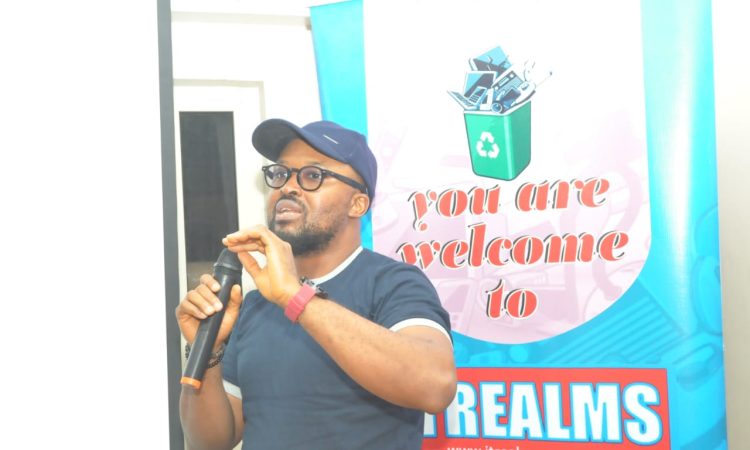
In a presentation delivered on behalf of the MD/CEO of IXPN, Muhammed Rudman, by Assistant General Manager Network, Uchechukwu Ugwuanyi the IXPN revealed startling data regarding the hidden environmental cost of Nigeria’s digital revolution.
Mr. Ugwuanyi highlighted the impressive trajectory of Nigeria’s internet landscape, noting that internet users had surged from 64 million in 2013 to 139 million as of December 2024. He further noted that while Lagos had zero Tier III data centers 15 years ago, the city now boasted about seven, with more under construction.
However, the IXPN boss warned that this growth came with a heavy price tag. “What is often invisible is the hardware churn,” Ugwuanyi stated. “Growth requires more equipment, energy, and materials. But frequent replacements of routers, switches, and servers create a massive stream of e-waste,” he said.
He described this as a sustainability paradox, where faster technology led to shorter device lifespans (typically 3-5 years), which in turn generated more waste adding with the world producing over 60 million tonnes of e-waste in 2024—of which less than 25 per cent was formally recycled—the stakes for Nigeria were incredibly high.
Despite the grim global statistics, Mr. Rudman’s message offered a unique strategic insight: Nigeria’s infrastructure deficit is actually an opportunity. “Nigeria’s digital build-out is young,” Ugwuanyi explained. “This is a chance to build green from the start.” He noted that because 99 per cent of internet users in Nigeria were on mobile, a significant portion of the heavy infrastructure; data centers, ISPs, and fiber networks, was yet to be built. This gave Nigerian operators the chance to adopt “Green Procurement” policies now, favoring vendors with sustainability reporting and longer hardware lifecycles, rather than trying to retrofit dirty networks later.
The presentation then outlined a practical roadmap for sustainable infrastructure for network operators and data centers to mitigate this crisis immediately. This roadmap includes three key areas:
First, the industry must Extend Hardware Lifecycles, moving away from discarding equipment solely due to age. Ugwuanyi advocated for refurbishing and redeploying older gear to secondary roles and purchasing certified refurbished equipment where performance allows.
Second, regarding Energy Efficiency, operators were urged to source partial renewables, such as solar offsets, and use low-power ASICs and optics to reduce carbon footprints.
Finally, the IXPN called for Transparency, asking operators to publish sustainability metrics alongside their standard uptime and traffic statistics, making environmental performance a key performance indicator.
Addressing the policy landscape, the presentation acknowledged that while the National Environmental Standards and Regulations Enforcement Agency (NESREA) regulated e-waste, “enforcement gaps persist.” The IXPN urged operators not to wait for regulation but to proactively support policy by working only with certified recyclers and demanding vendor take-back options to ensure traceability.
Closing the presentation, Ugwuanyi reminded the stakeholders that the internet was not a cloud-based abstraction but a physical machine. “The Internet’s infrastructure is physical, it has weight, it consumes power, and when it dies, it becomes waste,” he said adding “a sustainable Internet isn’t just about connecting more people… it’s about how responsibly we shed the devices we discard, so they don’t pollute the future we’re trying to build.”