
By Kingsley I. Ilechukwu, Bureau Chief, South West, Nigeria
The Managing Director of the Internet Exchange Point of Nigeria (IXPN), Muhammed Rudman, has underscored the urgent need for Nigeria to strengthen its local traffic exchange ecosystem, describing it as a strategic national imperative for speed, security, and digital economic expansion.
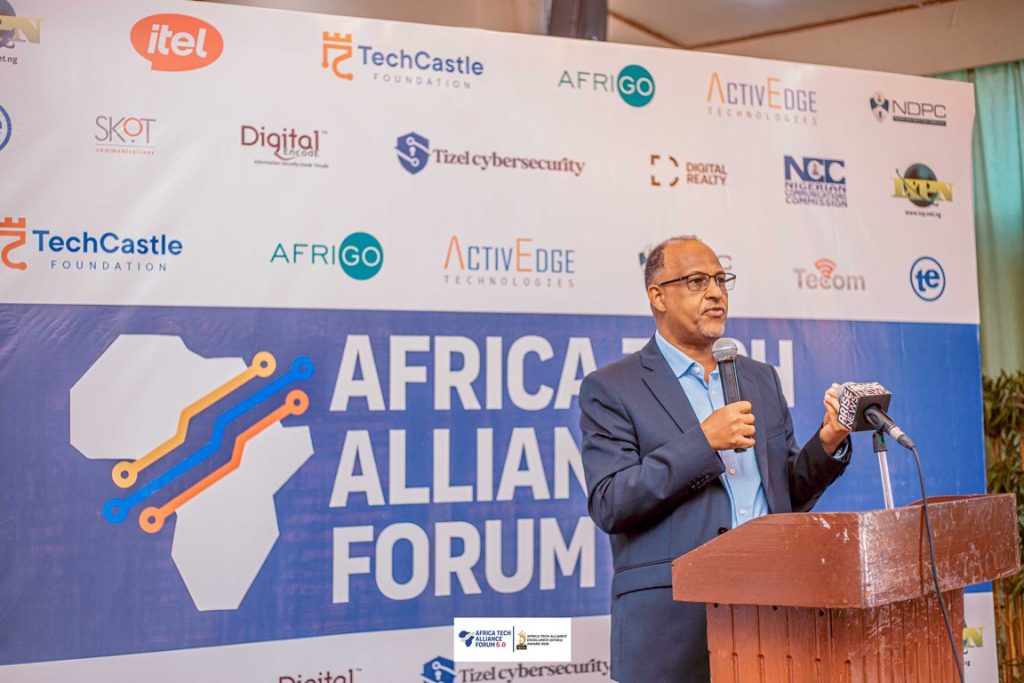
Speaking during a presentation at the African Tech Alliance (AfriTECH) Forum on Thursday last week, Rudman explained that local traffic exchange, where ISPs, content providers, and networks exchanged data within Nigeria rather than routing it through international paths, remained the backbone of a modern, efficient internet economy.
He noted that Internet Exchange Points (IXPs) enabled this by ensuring that data generated in Nigeria stayed within the country, leading to faster connectivity, better user experience, and significant cost savings.
Rudman emphasised that the most visible benefit for users was dramatically reduced latency.
According to him, internet traffic routed abroad often traveled through undersea cables to Europe before returning to Nigeria, resulting in delays between 150ms and 300ms, maintaining, however, with local peering at IXPN, latency droped to as low as 5ms to 10ms.
“This is the difference between a frozen video call and a smooth one,” Rudman said. “For real-time applications like gaming, fintech transactions, and cloud services, milliseconds matter.”
He added that lower latency boosted productivity for businesses and enhanced the performance of modern digital tools.
Rudman listed data sovereignty as another critical benefit of keeping traffic local, and explained that when Nigerian data was forced to travel through foreign infrastructures, it exposed the country to unnecessary security and surveillance risks.
“Local traffic exchange keeps Nigerian data protected under Nigerian laws and reduces exposure to foreign interception,” he stated.
He also stressed that maintaining local routing was essential for continuity during cable cuts. “If an undersea cable fails, locally hosted services, such as .ng websites and email, continue running normally,” he added.
Citing a major milestone, Rudman revealed that the Internet Exchange Point of Nigeria had recently crossed 2 terabits per second (Tbps) in peak domestic traffic, and described this as evidence of the rapid localisation of Nigerian internet traffic, with some members already achieving up to 70 per cent traffic localisation.
According to him, this growth had saved the Nigerian economy hundreds of millions of dollars in international bandwidth costs, positioned Lagos as a digital hub for West Africa, and provided the foundation for local innovation in fintech, media, cloud services, and more.
“A fast, cheap, and reliable internet is the platform upon which new digital businesses are built,” he said.
Rudman urged policymakers, telecom operators, businesses, and global content providers to deepen their commitment to local peering, and recommended that government recognised IXPs as critical national infrastructure, mandate public-sector peering, and created policies that incentivised local hosting.
He further noted that while Telecoms and Internet Service Providers (ISPs) peered more aggressively to strengthen the ecosystem, content providers such as Google, Meta, Netflix, and the rest, deployed more local caches.
While urging businesses to choose ISPs that participated in local exchange and adopted Nigeria’s online identity such as .ng, the IXPN Chief Executive posited that local traffic exchange iwas no longer a technical luxury but a cornerstone of Nigeria’s digital sovereignty, economic competitiveness, and national security.
“Local traffic exchange is the foundation for a faster, safer, and more sovereign digital future,” he said.
The fifth edition of the Africa Tech Alliance Forum, (AfriTECH 5.0), which held on Thursday, November 13, 2025, at the Oriental Hotel, Lagos, had as its theme, “AI & Sovereign Tech: Building Africa’s Digital Independence.”