
By Cyber Era NG Correspondents
At this year’s Regional Cooperative Agreement for Research, Development and Training Related to Nuclear Science and Technology for Asia and the Pacific (RCA) annual meeting, IAEA Director- General Rafael Mariano Grossi launched the RCA Social and Economic Impact Assessment on Hydrology and Groundwater Projects, showcasing 20 years of RCA achievements supported by the IAEA.
“For more than five decades, the IAEA has collaborated closely with and supported RCA State Parties through this regional cooperation platform to promote the peaceful application of nuclear science and technology in addressing critical societal needs,” said Mr. Grossi in the publication’s foreword.
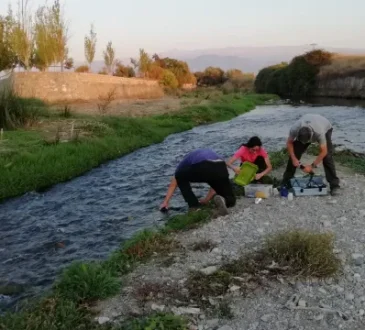
Nearly 300 scientists from 19 countries completed trained in the application of isotope hydrology for groundwater analysis, helping countries generate accurate data on groundwater for evidence-based decision making on sustainable water resource management. The publication features four case studies on Indonesia, Malaysia, Pakistan and Sri Lanka to highlight tangible success stories in the region.
The publication is the latest in a series of RCA impact assessments, with previous publications focused on achievements in radiotherapy, mutation breeding, non-destructive testing, air quality monitoring and food safety.
ARASIA Designates New Regional Resource Centre on Environmental Radiation Monitoring
At the annual meeting of the Cooperative Agreement for Arab States in Asia (ARASIA), Iraq’s National Nuclear, Radiological, Chemical and Biological Regulatory Commission (I-NRC) was officially designated as an ARASIA Regional Resource Centre on Environmental Radiation Monitoring. This recognition formalizes I-NRC’s role as a regional provider of expertise in its field.
“This signing is very important for us and our work with ARASIA, and we are sure it will prove a good addition in the field of qualitative and quantitative measurement,” said Chairman of I-NRC Fadhil Hawi Mizban.
Eleven ARASIA Regional Resource Centres now serve as regional hubs for nuclear medicine, dosimetry and environmental monitoring.
ARCAL States Parties Review Progress
At the 27th annual meeting of the Regional Cooperation Agreement for the Promotion of Nuclear Science and Technology in Latin America and the Caribbean (ARCAL), representatives from 21 Latin American and Caribbean countries showcased how regional cooperation is helping to translate nuclear science into practical solutions to improve people’s lives. In 2025, 777 professionals participated in ARCAL activities, helping countries apply peaceful uses of nuclear science and technology to strengthen cancer care, improve food security and apply innovative technologies such as the sterile insect technique to address emerging regional challenges.
States Parties also reviewed plans for a new generation of large-scale regional projects aligned with the IAEA flagship initiatives, reflecting a shared commitment to delivering greater impact through strengthened regional cooperation.