Unlocking The Nigerian Startup Act: NITDA Calls For Seamless Inter-Agency Execution To Drive Innovation

By Angeline Mgbele, Bureau Chief, Northern Nigeria
The National Information Technology Development Agency (NITDA) is calling for a unified, cross-sector push to translate the framework of the Nigerian Startup Act (NSA) into practical benefits for local entrepreneurs and investors.
This is contained in a press statement e-signed by the Director of Corporate Communications and Media Relations at NITDA, Hajia Hadiza Umar.
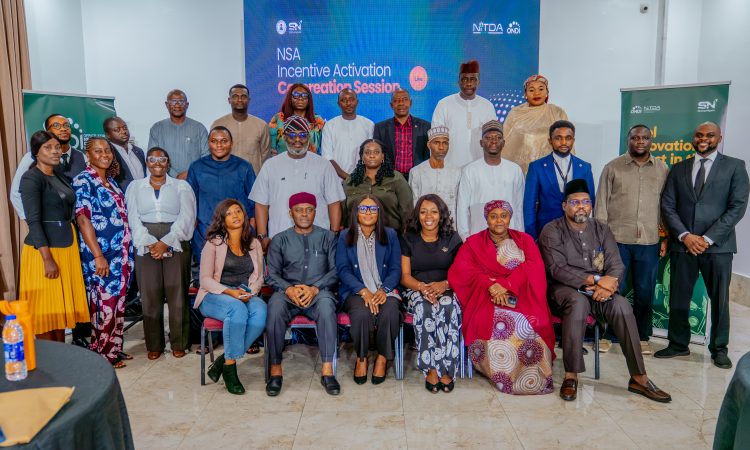
Per the NITDA statement, speaking at the NSA Incentives Activation Co-Creation Session in Abuja, north central, Nigeria, organised by NITDA’s subsidiary, the Office for Nigerian Digital Innovation (ONDI)—agency leaders stressed that while enacting the legislation was a historic milestone, its ultimate success would be measured by its tangible impact on everyday tech ventures.
Delivering remarks on behalf of NITDA Director-General Mallam Kashifu Inuwa Abdullahi, ONDI National Coordinator Victoria Fabunmi emphasised that Nigeria must now transition from policy design to operational delivery. Mallam Abdullahi noted that while early structural achievements such as setting up the Startup Consultative Forum and launching the digital startup portal had established vital channels for dialogue, the true test of the law lay in whether founders could easily access the relief and resources promised to them.
Abdullahi said the establishment of the Startup Consultative Forum and its governance structures had created an important platform for sustained engagement among stakeholders, but stressed that the real test of the legislation would be its impact on businesses operating within the innovation ecosystem.
According to him, government agencies, private-sector actors and other ecosystem stakeholders must work collectively to remove institutional bottlenecks and ensure that startups could access the opportunities created by the Act.
The NITDA boss said the participating institutions possessed different mandates, resources and policy instruments that, if properly coordinated, could significantly improve the operating environment for Nigerian startups.
“We want to go to the next level. We want to be able to say that the actors in our ecosystem have been able to benefit significantly from the legislation that has been passed, and it wouldn’t happen without everyone sitting in this room,” he said.
He urged stakeholders to shift attention from the mere existence of the legislation to its practical implementation, particularly the activation of incentives designed to promote investment, innovation and enterprise growth.
The NITDA DG noted that the implementation of the NSA involved institutions across several sectors, including trade, finance, communications, innovation, digital economy, science and technology.
He said bringing these institutions together was necessary to identify gaps, clarify responsibilities and develop workable mechanisms for delivering the incentives to intended beneficiaries.
He also urged stakeholders to embrace continuous engagement and feedback, noting that the success of the Act would depend largely on the ability of implementing institutions to work together and respond to the evolving needs of the startup ecosystem.

He said recommendations from the session would contribute to ongoing efforts to strengthen the implementation framework and create an environment where Nigerian startups could scale, attract investment and compete effectively in global markets.
In a context-setting presentation, “Operationalising the Incentive Provisions of the Nigerian Startup Act,” Acting Lead, Strategy, Research and Analytics at ONDI, Ms Elma Andah said the Act provides more than 31 incentives distributed across six major categories.
Mrs. Andah identified the categories as tax and fiscal incentives, regulatory support, funding access, exports and trade, ecosystem enablers, and training and capacity building.
Andah explained that implementing the incentives required the participation of more than 15 government institutions, making inter-agency coordination central to the success of the legislation.
She said the Nigerian Startup Act, signed into law on October 19, 2022, was designed to promote innovation, improve access to funding, strengthen collaboration and position Nigeria as a leading technology and innovation-driven economy in Africa.
According to her, Nigeria’s startup ecosystem had continued to demonstrate significant potential, with more than 3,000 startups and several globally recognised technology companies.
She added that Nigerian startups attracted about US$410 million in funding in 2024, despite the challenging economic environment.
Andah highlighted several areas of progress under the Act, including engagements with states on adoption, the operational startup support engagement portal, improved startup labelling timelines, the Startup Consultative governance framework, the Startup Investment Seed Fund framework and ongoing efforts to operationalise the regulatory sandbox framework.
She, however, stressed that the interconnected nature of the incentives meant that no single institution could deliver them independently.
“No single institution can deliver all these incentives alone. Implementation requires coordination across more than 15 MDAs,” she said.
Using practical examples, Andah explained that a startup seeking funding could simultaneously require tax incentives, while an enterprise seeking to export its products might need regulatory approvals adding investors seeking tax credits could also depend on access to the startup labelling system.
She consequently challenged participating institutions to clearly establish ownership of the incentives assigned to them, strengthen coordination, simplify access procedures and introduce effective monitoring and accountability mechanisms.
The session therefore provided stakeholders with an opportunity to identify implementation gaps and develop practical approaches for ensuring that the incentives contained in the Startup Act are accessible to startups, investors, innovation hubs and other beneficiaries.
The outcome, stakeholders noted, is expected to support a more coordinated implementation of the NSA and strengthen its contribution to Nigeria’s innovation, investment and economic development objectives.