
By Cyber Era NG Correspondents
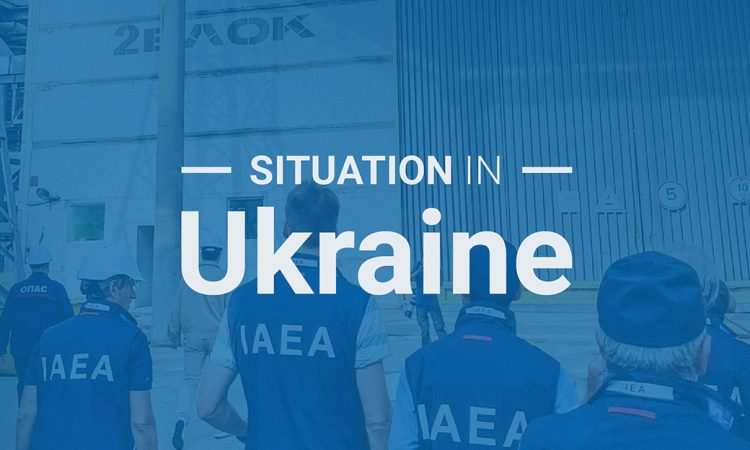
Increased military activity near the Zaporizhzhya Nuclear Power Plant (ZNPP) and the city of Enerhodar, where many plant staff live, further challenges efforts to maintain nuclear safety and security at the site, Director-General Rafael Mariano Grossi of the International Atomic Energy Agency (IAEA)has said.
The latest difficulties were underlined by a two-day internet outage from midday on Monday, the longest such disruption since the IAEA established its continued presence at the site almost four years ago. It was not immediately clear what caused the internet loss.
The ZNPP also continued to face water supply difficulties following last week’s disruption, although groundwater wells continue to provide water for essential safety and security functions at the plant.
“Military activity near the Zaporizhzhya Nuclear Power Plant and Enerhodar remains a serious concern. The recent internet outage and water supply problems are further examples of the challenges facing those who operate the plant under already difficult and stressful circumstances,” Director-General Grossi said.
The IAEA has repeatedly stressed the importance of adhering to the Seven Indispensable Pillars for ensuring nuclear safety and security during an armed conflict, including the need for operating staff to be able to fulfil their safety and security duties and make decisions free of undue pressure.
“The Seven Pillars remain essential for nuclear safety and security at all of Ukraine’s nuclear facilities. In particular, staff must be able to carry out their duties in conditions that allow them to maintain the safe and secure operation of the plant,” Grossi said.
Elsewhere in Ukraine, IAEA teams continued to report instances of military activity near nuclear sites. This morning, one of the operating NPPs reported the disconnection of a power line, coinciding with the detection of a cruise missile and a drone within its monitoring area.
At the Chornobyl Nuclear Power Plant, the site reported air raid alarms on a nearly daily basis and detected two drones within its monitoring area late last week, as well as two more earlier this week. At the South Ukraine Nuclear Power Plant, the site also continued to report air raid alarms on a nearly daily basis and detected two drones within its monitoring area late last week.
“The continued reports of air raid alarms and drone activity near nuclear facilities underline the need for maximum restraint and strict adherence to the basic principles for protecting nuclear safety and security,” Grossi said.
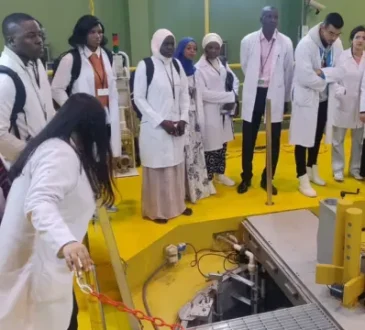
The IAEA also continued its comprehensive programme of assistance to Ukraine, delivering equipment to help address nuclear safety and security needs at facilities across the country.
A mobile whole-body counting system was delivered to the Emergency and Technical Centre of Ukraine’s nuclear power operator Energoatom, while flashlights were provided to the Kharkiv Institute of Physics and Technology. The deliveries were made possible with funding from Norway and the United Kingdom.
Nearly 50 organizations in Ukraine have now received emergency equipment through the IAEA’s assistance programme, with more than 240 deliveries coordinated since the start of the armed conflict.
“Alongside our continued presence at Ukraine’s nuclear sites, the IAEA is providing practical support where it is needed. With the continued support of Member States and the European Union, we will keep responding to Ukraine’s requests for assistance,” Grossi said.
From stability to growth and opportunities
Per Grossi: “Stabilization gives a country back something that isn’t easily measured: time. When families believe prices will remain stable, they start to save instead of simply protecting themselves against inflation. When businesses believe policies will remain predictable, they invest for years rather than months. Banks extend longer-term credit. Governments can focus on improving institutions instead of responding to the next emergency.
In other words, stability extends a country’s time horizon. I know how transformative that can be because I experienced it in my own country.
When Bulgaria suffered hyperinflation and a banking crisis in the 1990s, my mother’s lifetime savings disappeared almost overnight. I kept my own modest savings in dollars, in a tin box hidden in the cupboard. Restoring stability required difficult reforms, stronger institutions, and persistence over many years.
The results did not appear immediately. But because Bulgaria stayed the course, confidence gradually returned. Investment increased. People found work. Living standards improved. Earlier this year, Bulgaria adopted the euro—a milestone that would once have seemed impossible.
The lesson was not simply that stabilization can succeed. It was that its greatest rewards emerge only with time.
That challenge is even greater today. The global economy is becoming more uncertain. Trade patterns are shifting. Geopolitical tensions remain elevated. Artificial intelligence is reshaping industries and labor markets at remarkable speed. Capital is increasingly selective, flowing to countries that combine sound policies with predictable institutions.
In this environment, macroeconomic stability is not merely desirable—it is a prerequisite for attracting investment, creating jobs, and remaining competitive.
Unleashing potential
I saw that opportunity very clearly at the fast-developing Vaca Muerta oil and gas fields, in Neuquén province. That Argentina enjoys world-class natural resources has long been known. Yet Vaca Muerta shows that it also has talented engineers, entrepreneurs, and public and private leaders committed to developing them. And it is doing so at a moment when the world is looking for secure and reliable energy supplies.
Vaca Muerta is only one example of a broader opportunity. Mining investment is accelerating, knowledge-based services export nearly $10 billion annually, and agriculture remains among the world’s most competitive sectors. Beyond its natural resources, Argentina boasts world-class entrepreneurs, strong universities, and exceptional human talent.
The next phase is to ensure that these opportunities spread across the broader economy.
That message came through clearly in my discussions with business leaders. They welcomed the country’s renewed stability and growing investor confidence, while emphasizing the importance of reducing barriers to investment and broadening the recovery across more sectors.
It also came through in two very different conversations.
On my first morning in Buenos Aires, I met Marina, a makeup artist who kindly helped me get ready for the day ahead. She told me she works three jobs and that life remains difficult. Yet she also told me she hopes the country stays the course. Her circumstances have not changed overnight. What’s changing is her confidence that progress can last.
I later met renowned tango dancer Mora Godoy. Beyond her celebrated career, she has built a dance school and offers scholarships to young people who otherwise might never have the chance to learn.
Different stories, different professions—but both reflected the same belief that investing today can create opportunities tomorrow.
I heard that same longer-term perspective from students. Their questions were not about the next six months. They were about artificial intelligence, innovation, leadership, and Argentina’s place in the global economy. They wanted to know how their country could compete—not just next year, but over the coming decades.
Across these conversations with business leaders, workers, and students, I heard a common, encouraging message: Argentina is beginning to look beyond the next crisis to the opportunities ahead.
In the end, success will not be measured only by lower inflation, stronger reserves, or healthier public finances. It will be gauged by whether more businesses invest, small and medium-sized enterprises expand, workers find better jobs and higher wages, and more Argentines see the benefits of economic growth in their daily lives.
The next steps
That same long-term perspective guides the IMF partnership with Argentina.
Our role is to support the policies and institutions that make lasting stability possible. The government’s proposal for a stronger and more independent central bank can help ensure that progress on inflation endures. A durable fiscal responsibility framework, with clear rules and strong institutions, can help future governments preserve today’s hard-won gains. These reforms allow families to plan, businesses to borrow and invest, and governments to look beyond the next crisis.
Argentina’s economic transformation will also take time. The country has laid the foundations for a more stable future. The challenge now is to stay the course—to keep building the institutions, confidence, and opportunities that will allow today’s progress to become lasting prosperity.”