
Through IAEA support, scientists from developing countries are gaining access to ion-beam accelerators and conduct research with real-world impact
By Sotirios Charisopoulos and Natko Skukan, IAEA Department of Nuclear Sciences and Applications
Particle accelerators are powerful tools that drive innovation across health, agriculture, environmental studies, energy, materials science, cultural heritage and forensics. Yet access to these technologies remains limited for scientists in many developing countries, where financial, technical and infrastructural barriers stand in the way.
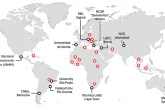
Between 2019 and 2025, an IAEA Coordinated Research Project (CRP) worked to change that, connecting researchers from 23 countries with state-of-the-art facilities abroad and generating 16 peer-reviewed publications in the process.
Expanding Access to Advanced Research Infrastructure
The CRP titled “Facilitating Experiments with Ion Beam Accelerators” was designed to enable scientists from developing countries to access accelerator facilities abroad and conduct high-quality research with socioeconomic relevance.
In most cases, this provided access to experimental techniques and equipment unavailable at their home institutions, enabling researchers to undertake studies that would otherwise not been possible.
Supporting Scientists Through Competitive Selection
Participation was based on a competitive selection process. Scientists submitted research proposals that were evaluated for scientific merit and technical feasibility. Successful applicants were awarded research contracts, through which the IAEA provided financial support for travel and accommodation during their experiments at selected host laboratories.
Host facilities were carefully chosen from institutions with advanced instrumentation capabilities, experience in supporting external users and a commitment to facilitating access for foreign nationals.
This ensured that participating researchers could benefit not only from cutting-edge infrastructure but also from expert guidance and opportunities for international scientific collaboration.
In total, the IAEA received 31 research proposals from scientists across 23 Member States. Following a rigorous evaluation process, 21 projects were approved, involving researchers from countries including Burkina Faso, Brazil, Egypt, Indonesia, Malaysia, Senegal, South Africa, Thailand and Tunisia.
Eight projects were led or coordinated by women, reflecting a positive trend toward gender equality in advanced scientific research.
Implementation and Scientific Achievements
The project’s implementation was disrupted by the COVID-19 pandemic. Travel restrictions and laboratory shutdowns significantly delayed research activities, with only a few experiments completed before early 2020. The majority took place between 2022 and 2024, once international mobility and laboratory operations resumed.
Despite these challenges, the project delivered significant scientific and educational outcomes. Supported research covered a broad spectrum of applications, with a strong focus on Ion Beam Analysis (IBA) techniques.
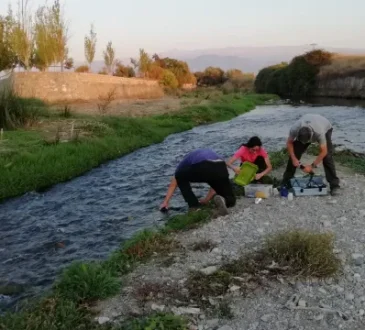
Topics included materials science, such as applications for space technologies, environmental pollution monitoring, human health, agricultural applications like soil analysis and crop improvement, and the development of nuclear instrumentation for use in harsh radiation environments.
Building Capacity and Long-Term Impact
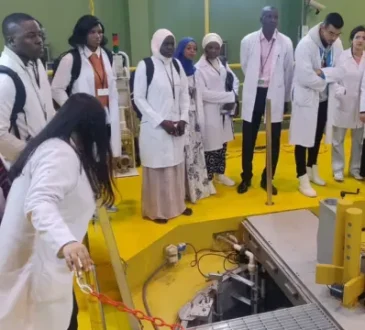
Beyond the scientific results, the initiative played an important role in capacity building. Sixteen early-career researchers were introduced to accelerator-based techniques for the first time, including nine women.
For 10 researchers, the experience contributed directly to their MSc or PhD studies, helping to shape the next generation of scientists in their respective countries.
The project has resulted in 16 peer-reviewed scientific papers presenting original findings. These contributions not only advance knowledge across multiple fields but also demonstrate the value of expanding access to advanced research infrastructure.
This CRP forms part of a broader set of IAEA activities aimed at promoting the sustainable development of accelerator facilities and their applications worldwide. By connecting scientists to tools they could not otherwise access and fostering long-term international collaboration, the IAEA is helping to promote more equitable access to the benefits of scientific progress, enabling researchers everywhere to contribute to solving global challenges.