
By Angeline Mgbele, Bureau Chief, Northern Nigeria
The Director-General of the National Information Technology Development Agency (NITDA), Mallam Kashifu Inuwa Abdullahi, has reaffirmed Nigeria’s commitment to digital literacy as a key driver of economic growth, social inclusion, and national prosperity, which that no meaningful digital economy can thrive without it.
In a press statement e-signed by the Director of Corporate Communications and Media Relations at NITDA, Hajia Hadiza Umar, Mallam Abdullahi reiterated this while delivering a presentation titled “Nigeria’s Journey to a Digital Economy” at the BusinessDay CEO Forum, held in Lagos under the theme “From Reforms to Recovery.”
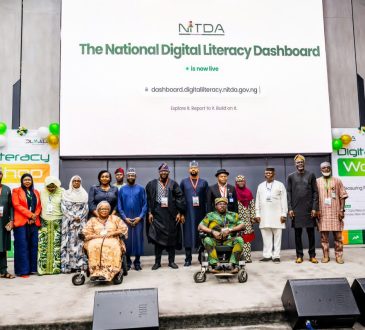
Abdullahi spotlighted the Digital Literacy for All (DL4ALL) Initiative, an ambitious national programme aimed at achieving 70 per cent digital literacy by 2027 across all sectors of the Nigerian economy, is laying the groundwork for a resilient, tech-driven future in the country.
He stated that, “Digital literacy is the foundation of our digital economy. It is not just about knowing how to use devices or apps, it is about empowering people to unlock opportunities for entrepreneurship, job creation, and economic participation.”
The NITDA DG explained that the DL4ALL Initiative targeted Nigerians from all walks of life, including those in schools, offices, marketplaces, and underserved communities, with a view to bridging digital gaps and driving inclusion. According to him, the initiative was designed to provide people with essential digital skills through mobile literacy campaigns, community training hubs, and accessible online platforms.
“Our goal is simple yet transformative, to ensure every Nigerian, whether in urban or rural areas, has the digital skills required to thrive in the modern economy. A digitally literate nation is a prosperous nation,” he said.
Reflecting on Nigeria’s digital evolution, Abdullahi traced the country’s journey back to 2001, when the first National IT Policy was introduced and NITDA was established. At that time, less than 500,000 Nigerians had access to computers, and the ICT sector contributed less than 0.5 per cent to the country’s GDP. Today, he noted, the story was remarkably different, with over 130 million Nigerians having internet access and ICT now contributing more than 17 per cent to the national GDP.
Abdullahi also recalled key milestones in Nigeria’s digital journey, including the enactment of the NITDA Act in 2007, which strengthened the agency’s mandate, and the policy shift in 2012 towards integrating ICT into daily life. He noted that by 2019, Nigeria had moved beyond basic ICT adoption to actively leveraging digital technologies for economic growth, marking the birth of the digital economy era.
He added that President Bola Ahmed Tinubu’s Renewed Hope Agenda prioritised digital innovation as a critical driver of Nigeria’s economic diversification through accelerating industrialisation, digitisation, creative arts, manufacturing, and innovation.
“Mr. President’s Renewed Hope Agenda spanning from economic reforms, national security, agriculture, energy, and infrastructure to education, health, social investments, and governance, presents clear opportunities for technology to make a transformative impact across all sectors.
“Technology is not just an enabler; it is a driving force behind achieving these goals and building a prosperous, inclusive, and resilient Nigeria. Today, technology allows us to simplify processes and make everyday life easier. However, we must also see technology not as a separate sector, but as a tool that cuts across every critical industry. Whether it’s agriculture, oil and gas, healthcare, education, finance, or any other sector, technology plays a pivotal role.
“Our President’s Renewed Hope Agenda recognises that technology is not just an enabler, it is a catalyst for economic growth, job creation, and national development. This transformation didn’t happen overnight. It has been a consistent process of reform, innovation, and deliberate action,” Abdullahi remarked.
While emphasising that economic reform must not be seen as a destination, but as a continuous journey of improvement and adaptation, Abdullahi said, “Reforming the economy to deliver sustained, inclusive growth is not about reaching a finish line. It is not something we achieve once and then stop. Rather, we must see it as a continuous journey, a constant process of improvement and innovation.”
Abdullahi outlined the strategic pillars guiding NITDA’s digital transformation, namely; Foster Digital Literacy and Cultivate Talents; Build a Robust Technology Research Ecosystem; Strengthen Policy Implementation and Legal Framework; Promote Inclusive Access to Digital Infrastructure and Services; Strengthen Cybersecurity and Enhance Digital Trust; Nurture an Innovative and Entrepreneurial Ecosystem; Forge Strategic Partnerships and Collaboration; and Cultivate a Vibrant Organisational Culture and an Agile Workforce in NITDA.
“These are not abstract goals, they are deliberate, actionable strategies designed to build an inclusive, resilient, and prosperous economy for all Nigerians. Our success as a nation depends on how well we equip our people with digital skills. If we get this right, we will not only create jobs and drive innovation but also secure Nigeria’s place as a leader in the global digital economy,” he stated.