
By Lynn LaRowe
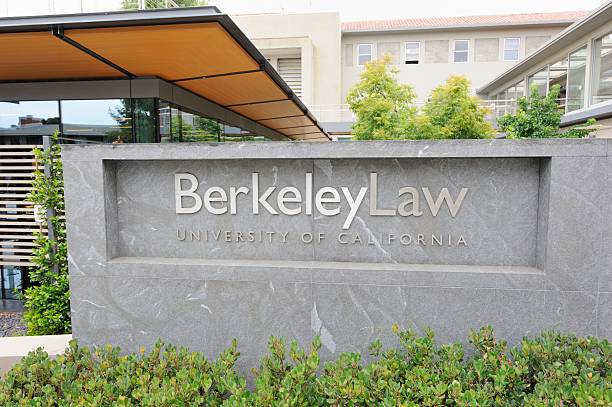
The University of California, Berkeley School of Law has adopted a sweeping new policy that restricts the use of artificial intelligence by students, saying the measure aims to ensure “our courses focus on requisite cognitive skills by default.”
Effective this summer, the new policy prohibits student use of AI “for aid in conceptualizing, outlining, drafting, revising, translating or editing” any work submitted for credit. Students cannot use AI for “any purpose” on exams and cannot upload course materials into a generative AI tool.
Law professor and faculty director of the Berkeley Center for Law & Technology, Chris Hoofnagle,said in a Thursday post on X, “Our new policy is about protecting the formative skills of lawyering, from case research to analytical judgement.”
“After those are established, students have lots of opportunity to use AI. Also, any instructor can opt out of the default rule,” Hoofnagle said. “Students are still free to use AI to prepare for class, to self-tutor, and so on.”
The school’s statement regarding the purpose of the policy said that while prospective lawyers may need to use AI in their future careers, “the current state of the technology requires that AI use be coupled with the cognitive skills necessary to strategically deploy the technology, to critically assess its work product, and to uphold ethical obligations to clients and to the legal system.”
The policy said it is meant to “ensure the best legal education possible for our students by equipping them to perform activities constitutive of excellent lawyering, such as mastering primary texts, using legal reasoning to apply legal authorities to novel legal questions, and independently developing creative solutions,” and to “promote fairness and administrability.”
Hoofnagle asked the question, “Don’t lawyers need to learn AI,” in an X post Thursday, and followed it by saying, “Of course. And we have AI-specific courses focused on those skills.”
“But when it comes to the basics, particularly in 1L, we need students to do the work, lest they never develop the ability to judge for themselves,” Hoofnagle said.
Instructors can deviate from the default rule for courses designed intentionally to teach AI fluency or “provided that they do so in writing and with appropriate notice and require students to disclose any authorized AI use.”
Students are not allowed to use AI to brainstorm ideas for a paper as that would amount to “prohibited conceptualizing.” Asking an AI tool to devise an outline for a paper is prohibited, as is asking a tool to summarize legal rules for use in a paper.
Students cannot use AI to revise a paper, such as by asking it to identify repetitive text, or to correct grammatical errors, as that would be prohibited editing, the policy says. Translating a paper from one language to another is also off limits.
Students can use AI for research on papers for the limited purpose of identifying sources, such as cases, statutes, or secondary sources.”
“Students are responsible for the accuracy of their research and all other aspects of their submitted work,” the policy says. “Citations to sources that do not exist will raise a presumption of prohibited AI use.”
Students who are uncertain about whether it is permissible to use an AI tool, should consult their instructor and obtain written clarification ahead of any use.
But the scope of Berkeley’s new policy received some criticism.
A law professor and director of law and technology initiatives at Northwestern University’s Pritzker School of Law, Daniel W. Linna Jr.,said he was “surprised at the breadth of this AI ban” at Berkeley.
“Higher education — particularly professional schools — should develop AI tools to accelerate learning,” Linna said on X in response to Hoofnagle’s posts. “Cognitive offloading is a real problem, but mounting evidence shows that the thoughtful redesign of courses and offering personalized AI tools can level the playing field and accelerate learning.”
Linna expressed particular concern over the Berkeley policy’s ban of grammar checks and translation, saying the prohibition “will disproportionately (and unnecessarily) harm first-generation students and nonnative speakers of English.”
Linna said preventing students from uploading course materials into an AI tool will deprive them “of the most useful ways in which law students are using AI tools, including to generate additional practice problems and exams for courses.” –Editing by Alyssa Miller.