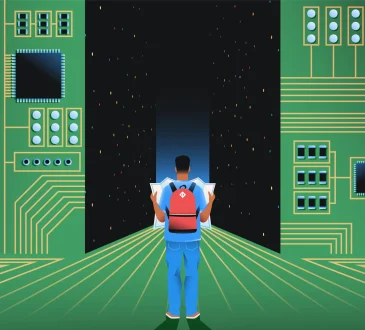

Every day, Nigerians give away pieces of themselves without giving it much thought, but time is ripe to put a stiop to this opines ANTHONY EMEKA NWOSU.
A parent fills out a school registration form and provides a child’s name, address and telephone number. A job seeker uploads a curriculum vitae and identification documents to a recruitment portal. A customer opening a bank account submits personal and financial information. A patient registers at a hospital and provides details about his or her health.
Most people do it because they have little choice. Modern life increasingly requires people to share personal information before they can access basic services.
But there is an important question that often comes afterwards: what happens to all that information?
For technology entrepreneur Abraham Tanta, that question has become increasingly important as Nigeria’s digital economy expands.

Tanta is the founder of Asiri, a Nigerian data privacy platform developed to help organisations understand and manage how they collect, use and protect personal information.
But behind the technology is a much simpler concern — what happens to ordinary people when the information they have entrusted to an organisation is poorly handled?
The consequences can be uncomfortable and, in some cases, devastating.
A phone number exposed online can attract endless scam calls. A leaked identity document can be used in fraudulent transactions. Financial information can expose people to theft, while personal details shared without proper safeguards can leave individuals vulnerable to harassment or identity fraud.
For the affected person, it is not a technical problem.It is personal.
This is why the debate around data protection in Nigeria is slowly moving beyond government regulations and corporate paperwork.
The Nigeria Data Protection Act places obligations on organisations that collect and process personal information. But having a policy on paper does not necessarily mean that an organisation is protecting people’s information properly every day.

That gap is where Tanta sees a problem.
He argues that companies should be able to demonstrate how they are protecting the information entrusted to them, rather than simply keeping a privacy policy in a file or preparing documents whenever a compliance exercise is due.
Asiri was developed to help organisations keep track of the personal information they hold, why they collected it, who has access to it and what measures are being used to protect it.
The platform also helps organisations identify areas where their privacy documentation or evidence may be missing or outdated.
One of its tools, Ask Eri, allows employees to ask questions about data protection in relatively simple language rather than having to navigate complicated legal documents.
That may sound like a small change, but data protection often depends on ordinary decisions made by ordinary employees.
The person receiving a customer’s identification document matters.
The employee storing a spreadsheet of customer telephone numbers matters.
The school administrator handling students’ records matters.
The staff member sending confidential information through an unsecured channel matters.
In other words, protecting personal information is not something that can be left entirely to the IT department or the company’s lawyers.
It is an organisational responsibility.
Asiri also provides a working environment where companies can collaborate with Data Protection Officers and licensed Data Protection Compliance Organisations. The intention is to make the process of reviewing records, identifying gaps and keeping evidence organised less dependent on scattered emails, spreadsheets and paperwork.
According to information provided by the company, more than 20 licensed DPCO practices and organisations, including Finlab Nigeria, Victoria Chambers, Bisly Nigeria, Chibek and FaithFuzion, use the platform.
The development comes at a time when Nigeria’s digital transformation is accelerating.
More Nigerians are banking with their phones, shopping online, registering for schools electronically, applying for jobs through digital platforms, accessing healthcare services and running businesses online.
Every one of these activities creates data.And as the amount of information being collected increases, so does the responsibility to protect it.The challenge is particularly significant for smaller businesses.
A small school, clinic, retailer or professional service provider may not have the resources of a large corporation, but it can still hold sensitive information belonging to hundreds or thousands of people.
Privacy, therefore, cannot become a luxury available only to organisations with large compliance budgets….For Tanta, the larger issue is trust.
People rarely read the lengthy privacy notices attached to the services they use. Most simply assume that the organisation asking for their information knows what it is doing.
That assumption carries a responsibility.
When Nigerians hand over their names, addresses, telephone numbers, identification documents, financial information or other personal details, they are effectively placing a measure of trust in the organisation receiving them.
The growth of Nigeria’s digital economy will depend not only on how quickly companies can build new platforms and services, but also on whether people feel safe enough to use them.
That makes data privacy more than a regulatory conversation.
It is becoming a social one.
Behind every record in a database is a human being. Behind every identification number is someone’s identity. Behind every telephone number is someone’s private life.
And as Nigeria becomes increasingly digital, the question may no longer be simply whether organisations are collecting data.
It may be whether they are worthy of the trust that comes with collecting it.