Samsung Galaxy Unpacked 2026 July Event: Everything Announced Including The Z Fold 8, Z Flip 8, New Galaxy Watches, AI Launches And More

From the wider Galaxy Z Fold 8 to new Galaxy Watches, here’s everything Samsung announced at Unpacked
By Dan Thorp-Lancaster, Editor
Samsung’s summer Galaxy Unpacked 2026 just wrapped up, and it was a full foldable phone event. Despite leaks spoiling a lot of announcements ahead of time, this was our first official look at the new Galaxy Z Fold 8, Galaxy Z Fold 8 Ultra, Galaxy Z Flip 8 and a pair of new Galaxy watches. Don’t let all the Galaxy talk make your head spin, though. We’ve rounded up everything Samsung announced so you can quickly catch up before everything launches on August 7.
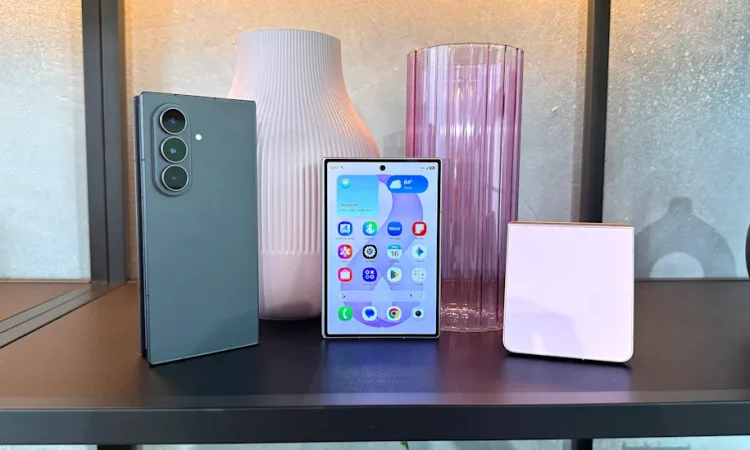
By far, the biggest news to come out of Unpacked is the new Galaxy Z Fold 8. While it’s the follow-up to last year’s Z Fold 7 in name, it has taken on an updated design. It is now wider and shorter than Samsung’s previous Folds, opening up to an interior display that’s closer to the dimensions of a tablet experience like the iPad Mini. Samsung says it’s built more for creativity and discovery, with a big focus on consuming content, which will look more at home on the wider screen.
As for size, you’re looking at a 5.5-inch display in an overall design that’s pretty close to the size of the old BlackBerry Passport if you’re old enough to remember it. Once it’s unfolded, you’ll find a larger 7.6-inch screen that’s been backed up by Samsung’s new Flex Titanium tech, which not only increases the durability of the screen but also makes the crease nearly disappear. That’s a big deal if you’ve been following foldables for a while, as the crease has remained one of the biggest downsides of using one.

Other tidbits include 50MP cameras on the back covering both wide and ultrawide. There’s also a decently sized 4,800mAh battery with up to 26 hours of battery life. When you run out, you can top up with 45W wired charging or 20W wireless — not the fastest on the market, but fast enough to get a decent amount of juice quickly.
The one area that will be tough to swallow for some is pricing. The Galaxy Z Fold 8 starts at US$1,899, which is cheaper than last year’s Z Fold 7 but is still pretty expensive for a phone. However, if you value a foldable phone that might finally strike the balance between being pocketable and a content-consumption workhorse, it may be worth the price.
The Galaxy Z Fold 8 is sure to catch all the attention coming out of Unpacked, but Samsung had some more iterative updates for its other folding phones.
While the Galaxy Z Fold 8 inherits the Z Fold 7’s naming scheme, the Z Fold 8 Ultra is the true heir to its design legacy. This is the direct successor to last year’s model, featuring a similarly taller and narrower design than the standard Z Fold 8. Samsung says this is the slimmest foldable it’s ever made, carrying on the Fold 7’s incredibly thin and light design. One other big improvement this year is a new open and close mechanism, which Samsung says makes the Z Fold 8 Ultra much easier to open than its predecessor.
Otherwise, this update focuses on refinement. You get the same Flex Titanium tech as the wider Z Fold 8, along with a zippy Snapdragon Elite Gen 5 for Galaxy processor, a 200MP main camera and a 50MP ultrawide shooter. There’s also a 5,000mAh battery that also sports 45W wired charging and 20W wireless.
As for the Galaxy Z Flip 8, don’t expect a device that reinvents the wheel. The Flip 8 looks very similar to the Flip 7, but makes some small changes that make it easier to use. Those include a new hinge design for easier opening and closing, along with a new UI that makes the cover screen work more like an open screen when it’s closed. Samsung says this is also its lightest Flip yet, and it’s just 6.1mm thick (that’s thinner than an iPhone 17, for reference).
Starting prices for these two land at US$2,099 for the Z Fold 8 Ultra and US$1,199 for the Z Flip 8. Both are US$100 more than last year’s models, which isn’t too surprising given the memory shortage ravaging consumer tech.
Keeping in line with the more iterative updates on the majority of Samsung’s new foldables, its new watches aren’t taking chances with any major design overhauls. Instead, Samsung is focusing on refining what’s already there with new features and some big battery upgrades.
The Galaxy Watch Ultra 2 remains Samsung’s rugged go-to for athletes and outdoorsy folks, and it now features a shock-resistant, titanium case that’s thinner and more comfortable. The big addition is that it’s now water-resistant enough to track diving, and it can keep an eye on depth, time, and water temperature while offering real-time guidance. There’s also a new trail-running feature that offers route and elevation guidance and estimates sweat loss, so you know when to hydrate.
As for the new Galaxy Watch 9, things are much more similar to last year’s Galaxy Watch 8. However, it is now offered with more lightweight bands. The bigger changes are on the software side, where the Watch 9 now has a raise-to-talk feature that lets you easily issue voice commands to Samsung’s AI assistant without using a wake word.
The biggest update to both watches, though, is that they now have much bigger batteries. The Watch Ultra 2’s battery is 35 per cent bigger while the Watch 9’s is 20 per cent larger. They also work alongside a refreshed Samsung Health app, which gives you new metrics to track like vitals, your heart health score, daily cardio load and fitness index. You’ll also get a vitals report every morning so you know how ready you are to tackle your day.
Like its foldable phones, Samsung’s watches are also a little pricer this year. The Galaxy Watch Ultra 2 is US$699, which is up from US$649 on the previous model. The Galaxy Watch 9 is now $379, which is up from US$349.
As one last reveal at the end of Samsung’s presentation, the company provided an overview of its upcoming smart glasses. Developed in collaboration with Gentle Monster and Warby Parker, the glasses are the company’s first, meant to compete in a nascent space currently dominated by Meta’s smart glasses. They’ll also have Google Gemini Intelligence on board, letting you do things like summarize things around you in notes, share video in a call with a friend or ask for recipe tips while you’re cooking.
Interestingly, Samsung says the glasses can hit up to nine hours of battery life on a charge. The case for the glasses packs enough juice for seven charges, so you can top up multiple times on long trips.
There was no word on pricing, but Samsung says its smart glasses are coming this fall.