
By Jaehyuk Eoh, IAEA Department of Nuclear Energy
The first IAEA Small Modular Reactor (SMR) School held in a technology provider country was hosted by the US Department of Energy’s Argonne National Laboratory in June.
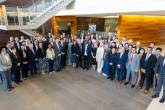
It brought together 47 policy makers, regulators and nuclear energy programme representatives from 28 countries to engage directly with SMR developers and industry organizations. Discussions focused on the status, readiness and deployment prospects of SMR technologies currently under development in the US.
“This new edition of the SMR School expands both the scope and depth of the initiative,” said the IAEA’s SMR Platform Coordinator Dohee Hahn. “By bringing together countries, SMR suppliers and industry organizations, it provides a unique platform for informed discussions on the opportunities and challenges associated with near-term deployable SMRs.”
Growing Interest in SMRs
Global interest in SMRs has grown significantly in recent years due to expected advantages such as shorter construction times and lower upfront capital costs compared to large reactors.
Currently only China and Russia operate SMRs, with a total of four reactor units deployed, but five SMR projects are under construction in other countries, with more expected to begin in the near future.
The IAEA’s latest projections show SMRs comprising nearly a quarter of new nuclear capacity by mid-century in the high-case scenario, with many countries interested in nuclear power exploring SMRs as part of their energy systems.
A New Chapter for the SMR School Initiative
Since the inaugural edition in 2025, the IAEA’s SMR School has promoted understanding of SMRs and their potential role in national energy strategies.
Earlier schools held by the IAEA in Argentina, Austria, Kenya and Thailand, focused on building foundational knowledge in technology, infrastructure, regulations, nuclear safety, nuclear security, safeguards and stakeholder engagement.
This US edition of the school introduced a new element that complements earlier efforts by providing the opportunity to a directly engage with SMR technology developers and entities involved in SMR deployment.
“One of the most interesting takeaways was that many developers are not seeking to reinvent nuclear energy, but to improve and optimize what already works, leveraging decades of experience to reduce costs, risks and deployment timelines,” said Gabriel Baum Ramos of Paraguay’s National Electricity Administration. “Equally rewarding was the opportunity to exchange experiences with participants from different countries, reinforcing the importance of international cooperation in advancing safe, sustainable and resilient energy systems.”
Throughout the week, participants discussed the status of SMR projects under development around the world, technology development pathways, licensing activities, deployment strategies, fuel cycle and supply chain considerations, safety, security, and non-proliferation issues .
“The IAEA SMR School was a valuable event to discuss the current readiness of SMRs, in the context of opportunities and challenges to accelerating their deployment,” said Vice President of Nuclear Deployment and Fuel Cycle at the Nuclear Energy Institute Marcus Nichol. “The ability to meet and engage with peers from around the world resulted in a tremendous learning and growth opportunity.”
Direct Engagement and Technical Exchange
The technical part of the programme provided insight into the scientific, engineering and institutional capabilities supporting SMR development and deployment.
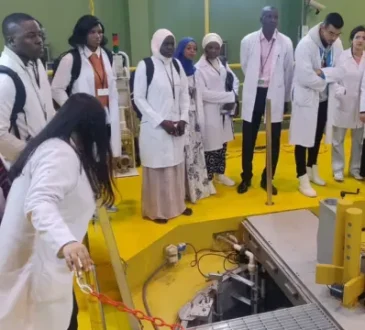
Sessions with major US SMR developers provided a high-level overview of SMR programmes in the US, covering energy planning, economics, safeguards, nuclear security, licensing considerations, fuel cycle, supply chain, stakeholder engagement and international cooperation. IAEA experts’ lectures and information shared with participants covered topics such as the regulatory and legislative frameworks, reactor technologies, safety and security considerations, fuel strategies and regulatory engagement.” Participants also visited Argonne National Laboratory facilities where they were briefed on US research activities supporting advanced reactor technologies.
“The supplier engagement sessions were particularly valuable, providing rare and substantive insight into the current status and technical details of SMR developers’ reactor technologies,” said a Principal Analyst in the Nuclear Energy Office at Singapore’s Energy Market Authority Kyler Ong. “The technical visits to Argonne’s facilities were equally enriching, offering first-hand exposure to the Laboratory’s work in particle accelerator science and liquid metal fast reactor experimentation.”
IAEA Support towards Safe Deployment of SMRs
SMR Schools are part of the IAEA’s support to Member States interested in SMR technology, which also includes the SMR Platform and the Nuclear Harmonization and Standardization Initiative (NHSI).
Building on this format, additional SMR Schools are planned in other providers’ regions from 2026 onwards to provide Member States with a comprehensive overview of SMR developments.