
Eastern and Southern Africa— home to over 656 million people, many of whom are poor and face significant challenges accessing adequate, safe, and nutritious food every day— has some of the most vulnerable food systems in the world, write HOLGER KRAY, SHOBHA SHETTY AND PIERRE-OLIVIER COLLEYE.
The recently approved Food Systems Resilience Programme for Eastern and Southern Africa will help tackle the underlying structural challenges of food insecurity and address the vulnerability to unpredictable shocks.
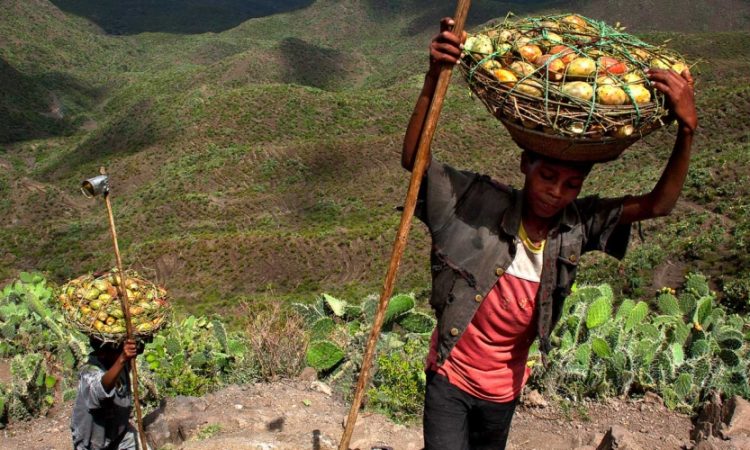
Madagascar, where 7.8 million people are facing food insecurity, and Ethiopia, where up to 22.7 million people are food insecure, will benefit from the first phase of the project. Both countries are experiencing historically severe droughts, exacerbated by climate change.
The program directly responds to three food security challenges facing the region and taps into three opportunities to improve the resilience of food systems for stronger, healthier communities.
Three Challenges Facing Food Security
Climate Shocks to Food Systems: Since 2019, extreme weather, conflict, and the COVID-19 pandemic have pushed nearly 50 million additional people into acute food insecurity across Sub-Saharan Africa. In addition, while climate-induced shocks to the food system used to occur one in every 12 years on average, they are now occurring about every 2.5 years. This is too frequent for countries, regions, or farms to sufficiently recover between the shocks, making investments in building food systems resilience key to enabling the region to respond to challenges more quickly and effectively.
Global Price Shocks: Countries in Eastern and Southern Africa are also affected by global shocks to food systems— including volatility in commodity markets, increases in energy and fertilizer prices, trade disruptions, and the ongoing events unfolding in Ukraine. These shocks have led to steep increases in food prices throughout the region and increased food insecurity as families struggle to stretch their incomes.
Food Price Inflation in Selected Eastern and Southern Africa Countries (Year-on-Year)
Undernourishment: Food security is not just about famine or acute hunger, it is also about longer-term undernourishment that leads to poor health outcomes. Across Eastern and Southern Africa, the share of undernourished people is increasing, from 21 per cent in 2019 to over 25 per cent in 2020, with serious consequences for the health and wellbeing of people in the region. Madagascar faces chronic food insecurity and the highest malnutrition rates in Africa. Almost half of the country’s children under five are stunted, and about one-quarter of its population is undernourished. In Ethiopia, women and children are most affected, and an estimated 44 per cent of children are stunted. Quite often, in crisis situations, it is dietary diversity that is being compromised first.
Prevalence of undernourishment in SSA by subregion, 2015–2019 with projections to 2030; Share of population with insufficient food consumption as of January 2022
Opportunities for Action
Despite these challenging circumstances, enhancing the resilience of food systems in the region offers real opportunities to not only tackle food insecurity and ensure that everyone has enough to eat, but to also generate more jobs, promote trade, and enhance resilience.
Jobs! The agricultural and food sector remains a significant source of economic growth and job creation, accounting for nearly 15 per cent of the GDP of countries in Eastern and Southern Africa in 2020. As much as 59 per cent of the region’s population was employed in agriculture in 2019, and in some countries, even larger shares were: 86 per cent in Burundi, 80 per cent in Somalia, 76 per cent in Malawi, 70 per cent in Mozambique, and 66 per cent in Ethiopia and Zimbabwe. Enhancing the agricultural sector, therefore, has enormous potential to improve the incomes and opportunities of people across the region. And when people have stable jobs, they are better able to cope with shocks without dipping into money needed for food.
Trade! Demand for food products is expected to increase significantly over the coming decades as the population grows and cities expand. Presently, the food and beverages industry accounts for 38 per cent of GDP in Eastern and Southern Africa. By 2050, the industry is expected to see an 800 per cent increase in the value of food, and trade in processed foods could increase by up to 90 per cent. Moreover, increased trade doesn’t just expand business opportunities, it also helps stabilize food availability and access across the region. When one country experiences a climate shock, for example the current drought in the Horn of Africa or the frequent cyclones that hit Madagascar, other countries can boost their exports to fill the gaps.
Resilience! There is significant potential to enhance agricultural productivity and climate resilience through innovation. In Eastern and Southern Africa, agricultural productivity could increase by up to 2–3 times if better farm inputs and production technologies are adopted, if water and soil resources were used more efficiently, and if natural capital and ecosystems were restored. Digital tools for monitoring climate risks can identify the onset of climatic shocks before they happen and facilitate responses for building resilience. Automated irrigation systems, soil sensors, and drones can boost efficiency in production.
World Bank Action
With these challenges and opportunities in mind, the Food Systems Resilience Programme for Eastern and Southern Africa will provide a range of support, from restoring agricultural production capacity, to improving the management of natural resources, getting food to the consumers, and streamlining resilience in national and regional policymaking.