imPACT Review Highlights Namibia’s Commitment To Cancer Care And Opportunities To Expand Services

By Celestine Okorie, Bureau Chief, Southern Africa
Namibia is set to strengthen cancer care following an international review that assessed the country’s cancer control needs and capacities and identified actions to expand services, build the oncology workforce and improve access to cancer care across the country.
Cancer is a growing challenge in Namibia. More than 4 200 new cancer cases are diagnosed each year, and this number is projected to rise to 7 200 by 2040 according to Globocan 2024 estimates.
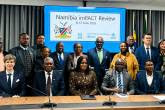
Conducted by the IAEA, the World Health Organization (WHO) and the International Agency for Research on Cancer (IARC), the imPACT Review brought together nine international and regional experts to evaluate cancer control services and systems from prevention to palliative care and identify priority areas for action. It was Namibia’s second imPACT review, following an initial assessment in 2011.
“The recommendations that emerge from this mission will become the blueprint for our National Cancer Control Plan and guide our investment decisions, workforce training and policy direction for the next decade,” said Namibian Minister of Health and Social Services Esperance Luvindao.
From 8 to 12 June, the review team met with national cancer stakeholders, regional and multilateral partners, and visited state and private hospitals, primary care centres, universities, clinics providing oncology training and regional health directorates in Windhoek and Oshakati. They also held discussions with representatives of the National Assembly, the National Planning Commission, the Ministry of Finance and the Social Security Commission.
The review comes at a time when Namibia is advancing towards its first National Cancer Control Plan. Prepared by a multisectoral technical working group, the plan is expected to guide future investment and action across the cancer care continuum. The team also commended the Government for allocating funding to expand cancer infrastructure and strengthen services.
Cancer Prevention Offers Major Opportunities
Breast, cervix uteri, prostate and Kaposi sarcoma account for almost half of all diagnosed cases in Namibia. Key cancer drivers include population growth and ageing, lifestyle factors and infectious diseases such as HIV.
The review highlighted several modifiable cancer risk factors, including alcohol consumption, tobacco use, obesity and vaccine-preventable infectious diseases such as hepatitis B and human papillomavirus (HPV). Experts recommended strengthening prevention programmes, sustaining progress in HPV vaccination and developing long-term approaches to cancer prevention.
A high proportion of patients are diagnosed at a late stage of disease. Suboptimal referral and patient-tracking systems, stigma around cancer and limited awareness of risk factors, together with geographic barriers, contribute to delays in screening, diagnosis and treatment. The review recommends strengthening patient referrals, follow-up and community awareness initiatives.
“Namibia’s cancer prevention and early detection gaps are not intractable. The country already has a functioning primary health care platform to build on — the real work now is matching that foundation with dedicated financing, expanded workforce capacity, and sustained community engagement,” said WHO’s Lead for the Cervical Cancer Elimination Initiative Prebo Barango. “That is a solvable set of problems, and Namibia has both the platform and the political will to solve them.”
Expanding Access to Cancer Services
To improve access to care, the review recommended consolidating cancer services at the public Windhoek Central Hospital, while simultaneously expanding care to other regions to reduce access barriers .
The review found that Namibia’s radiotherapy capacity remains limited, with one public Cobalt-60 radiation therapy unit and two private linear accelerators serving the entire country. Experts recommended a phased expansion of radiotherapy services, including facility upgrades in Windhoek and Oshakati and additional training opportunities for specialists.
The team also underscored the importance of addressing shortages of pathologists, radiologists, radiation oncologists, radiation therapists, clinical sonographers and medical physicists. The review noted that expanding local training programmes through partnerships between hospitals and universities could help build and retain specialized expertise.
“Reducing the cancer burden in Namibia will require a stronger focus on prevention, earlier diagnosis and more equitable access to services across the country, particularly considering the vast territory. Beyond technical recommendations to strengthen cancer care, this imPACT Review has brought together stakeholders from across the health system to collectively discuss existing strengths and identify ways to leverage established health programmes and partnerships,” said Geraldine Arias de Goebl, Section Head for Cancer Control Review and Planning at the IAEA.
Through its human health and technical cooperation programmes, the IAEA has been working with national partners in Namibia to expand the country’s capacity for cancer diagnosis and treatment and has supported Namibia in establishing the country’s first cancer treatment centre.
“We have a long-standing partnership with Namibia,” said Head of the Nuclear Medicine and Diagnostic Imaging Section of the IAEA Diana Paez. “By strengthening diagnostic imaging and radiotherapy infrastructure and services, we remain dedicated to supporting the country with the tools and skills needed to deliver hope to cancer patients.”