
By Salwa Dawoud, IAEA Office of Public Information and Communication
Nuclear science and technology contribute to solving some of the world’s most important challenges – from growing stronger crops, diagnosing and treating cancer, protecting oceans, tracing water beneath the desert landscapes and uncovering hidden details in centuries-old paintings.
Students can discover how these techniques are used in the real world at the IAEA Visitor Centre in Seibersdorf, about an hour from Vienna. Since its inauguration in September 2025, the Centre has welcomed student groups from around the globe, including Austria, Japan, Poland and the United Arab Emirates. Here are five reasons to add a visit on your class calendar:
1. See Science in Action
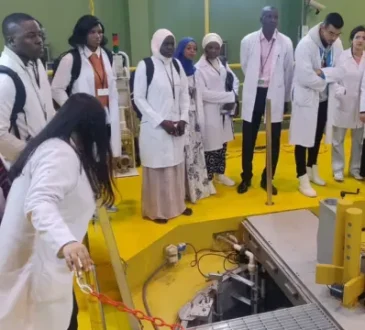
The Visitor Centre shares its location with the IAEA’s laboratories in Seibersdorf. The labs conduct research and development, deliver training and capacity-building to scientists and officials from Member States, as well as provide technical and analytical services. The innovative work of the labs is showcased at the Visitor Centre exhibits.
2. Learn Beyond the Classroom
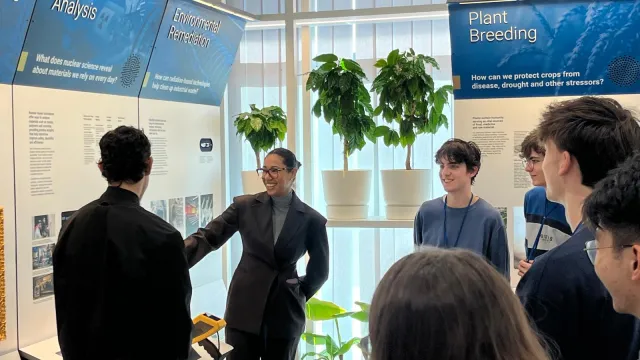
The Visitor Centre’s 33 interactive exhibits combine physical and digital displays, helping nuclear science and technology become something you can touch, test and try.
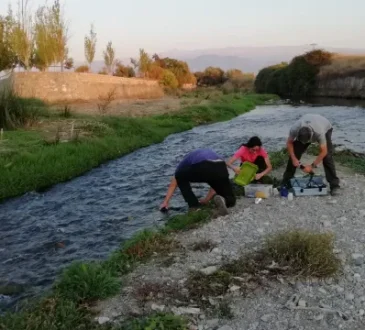
Concepts from physics, biology and chemistry classes stop feeling abstract. See, for example how isotopes reveal where river water really comes from or learn how much of the world’s low carbon energy comes from nuclear power.
“It was very surprising to me that there are so many ways to use radiation in different areas of [for example] chemistry or industry. That was amazing because it is important to all of us,” said student from Poland Antoni Kucharski.
3. Explore STEM Career Possibilities
Choosing a field of study can be challenging when career paths feel abstract. Understanding what engineers, plants breeders and analytical chemists do makes options concrete.
Many students arrive with a narrow view of nuclear science and leave having discovered a wide range of science, technology, engineering and mathematics (STEM) careers they had never considered before.
“I would definitely recommend the exhibition to other students as well. It is very informative…I am sure there is always something new that you didn’t know before,” said one of the students Cornelia Ziderics from Austria after her visit.
4. Learn Directly From Experts
Every visit is guided, which gives students the chance to ask questions about what they are seeing, on how nuclear techniques are applied around the world and how the science has evolved over the years.
These conversations and historical perspective offer insights that are difficult to gain from textbooks or online searches alone.
5. Discover Nuclear Science in Everyday Life
Most people associate nuclear science with nuclear power plants and hospitals. Yet, its applications reach far beyond that. Nuclear techniques help verify for example the origin and authenticity of food, protect crops, monitor water resources, and support environmental research. Once you start looking, you realise that nuclear science contributes to many aspects of everyday life in ways you might never have expected.