Nigeria’s Telecommunications Sector Signposts Africa’s Success Story In Economic Liberalisation And Digital Transformation-ALTON

By Kingsley I. Ilechukwu, Bureau Chief, South West, Nigeria
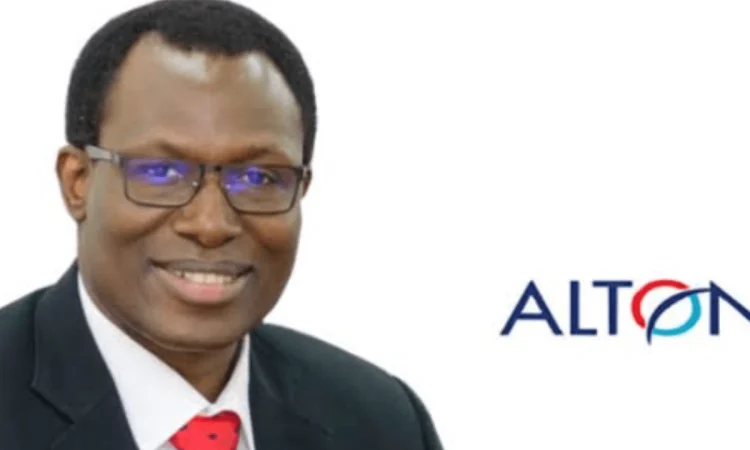
The Nigerian telecommunications sector is an accurate barometer for measuring the success of Africa in its strides towards economic liberalization and digital transformation. Chairman, Association of Licensed Telecommunications Operators of Nigeria (ALTON) Engr. Gbenga Adebayo gave this verdict in his presentation at the Nigeria Information Technology Reporters Association (NITRA) Innovative Conference 2026 on the theme “Bridging Nigeria’s Digital Divide with Scientific Innovation.’’
Engr. Adebayo titled his address: A Chronicle of Telecom Operators’ Efforts in Bridging Nigeria’s Digital Divide Through Innovation: Achievements, Challenges and Future Prospects.
Adebayo’s words are reproduced below:
Nigeria’s telecommunications sector represents one of Africa’s most remarkable success stories in economic liberalisation and digital transformation. From fewer than half a million connected telephone lines before the advent of GSM in 2001 to over 200 million active subscriptions today, the sector has transformed how Nigerians communicate, transact, learn, govern and conduct business.
The industry is one of the country’s greatest success stories in economic liberalization and digital transformation, the sector has evolved from a privileged service available to a few into the critical infrastructure that underpins nearly every aspect of modern life.
Through sustained private investment, technological innovation and constructive engagement with government, telecommunications operators have connected millions of Nigerians, expanded access to digital services and laid the foundation for the country’s digital economy.
Today, telecommunications enables banking, education, healthcare, agriculture, security, commerce, governance and entertainment. Every digital payment, online classroom, telemedicine consultation, emergency response and e-government service depends on reliable telecommunications networks. The industry’s impact therefore extends far beyond communications; it has become the backbone of national development.
Over the past twenty-five years, operators have invested billions of dollars in mobile networks, fibre optic infrastructure, international connectivity, data centres, cloud platforms, renewable energy systems and emerging technologies such as 5G. These investments have significantly expanded broadband coverage, improved service quality and driven financial inclusion, digital entrepreneurship and innovation across the economy.
The telecommunications revolution has unfolded in distinct phases. The first focused on expanding voice communications through nationwide GSM deployment, making telephone access affordable and widely available. The second phase ushered in mobile internet services through GPRS, EDGE and 3G technologies, enabling Nigerians to access online information and digital services. Subsequent investments in 4G, fibre optic networks, Fibre-to-the-Home (FTTH) and 5G have accelerated broadband penetration and positioned Nigeria for the next generation of digital innovation.
Telecommunications operators have also played a critical role in extending connectivity to rural and underserved communities. Through continuous network expansion, infrastructure sharing, renewable energy solutions and collaboration with government initiatives, operators have reduced geographic barriers to communication and improved access to education, healthcare, financial services and economic opportunities.
The Association of Licensed Telecommunications Operators of Nigeria (ALTON) has provided a unified platform for industry engagement with government and regulators.
Through advocacy on infrastructure protection, Right-of-Way reform, multiple taxation, consumer protection, quality of service and investment sustainability, ALTON has consistently promoted policies that support industry growth while protecting consumer interests.
Despite these achievements, the industry continues to face significant challenges. Multiple taxation, inconsistent Right-of-Way policies, vandalism and theft of telecommunications infrastructure, rising energy costs, foreign exchange volatility, regulatory uncertainty and affordability constraints all threaten the pace of future investment. Damage to fibre optic networks and base stations not only disrupts communications but also affects banking, healthcare, education, security and other sectors that depend on telecommunications infrastructure.
Looking ahead, Nigeria is well positioned to consolidate its leadership in Africa’ s digital economy. Emerging technologies—including Artificial Intelligence (AI), the Internet of Things (IoT), cloud computing, satellite broadband and 5G—offer significant opportunities to deepen digital inclusion, improve productivity and stimulate innovation.
Realising these opportunities will depend on sustained investment, robust infrastructure, local content development and widespread digital literacy.
Bridging Nigeria’s digital divide is a shared national responsibility. Telecommunications operators have demonstrated remarkable commitment through decades of investment and innovation, but universal digital inclusion will require continued partnership across all levels of government, the private sector and civil society.
Telecommunications is no longer simply an industry—it is the foundation of Nigeria’s digital economy. Every investment in resilient telecommunications infrastructure is an investment in economic growth, national security, innovation and inclusive development.
Protecting and strengthening this foundation is essential if Nigeria is to achieve its ambition of becoming a globally competitive digital economy where every citizen has access to affordable, reliable and meaningful digital connectivity.
Conclusion
Nigeria’s telecommunications journey since liberalisation in 2001 stands as one of the Country’s most significant development success stories. Through sustained private investment, technological innovation and resilient collaboration, telecommunications operators have transformed communications from an exclusive privilege into a ubiquitous enabler of economic and social progress.
Today, the sector underpins banking, healthcare, education, commerce, security and governance. It has connected millions of Nigerians, expanded opportunities for businesses, empowered entrepreneurs and accelerated national development.
Yet, the work is not complete. Millions of Nigerians remain underserved, and the industry’s continued ability to bridge the digital divide depends on addressing persistent challenges such as multiple taxation, Right-of-Way constraints, infrastructure vandalism and high energy costs.
As I have consistently maintained:
Telecommunications is no longer simply an industry; it is the foundation upon which Nigeria’s digital future is being built. Every investment in resilient telecommunications infrastructure is an investment in economic growth, innovation, national security and inclusive development.
Today we chronicles the contributions of telecommunications operators in bridging the Country’s digital divide through sustained private sector investment, technological innovation and strategic collaboration with government and regulators. It examines the evolution of the industry from the early days of GSM to broadband, fibre-optic expansion, mobile financial services, 4G, 5G and emerging digital technologies.
Distinguished Ladies and Gentlemen,
As we reflect on Nigeria’s telecommunications journey, there is every reason to be optimistic. While challenges remain, recent developments demonstrate that constructive engagement among government, regulators and industry is yielding tangible results and strengthening the foundation of Nigeria’s digital economy.
First, I wish to commend the administration of President Bola Ahmed Tinubu, GCFR, for its support of the telecommunications sector. The recognition that digital infrastructure is central to economic growth, national security, innovation and inclusion has translated into important policy actions that have improved investor confidence and strengthened the operating environment for the industry.
In particular, I wish to express the appreciation of ALTON and its member operators to the Nigerian Communications Commission (NCC) under the leadership of Dr. Aminu Maida, for its transparent, consultative and evidence-based regulatory approach. The Commission has continued to demonstrate that effective regulation is achieved not through confrontation but through collaboration, balancing consumer protection with the need for a sustainable industry capable of attracting continued investment.
Several recent initiatives deserve special recognition. The Commission’s leadership in addressing industry sustainability, including the review of retail tariff frameworks after years of mounting cost pressures, has helped restore a measure of stability to the sector. Equally commendable is the successful resolution of the long-standing USSD debt issue, which removed a major source of uncertainty between the telecommunications and banking industries and reaffirmed the importance of coordinated public policy in resolving complex sectoral challenges.
The implementation of the Critical National Information Infrastructure (CNII) framework is another landmark achievement. It appropriately recognises telecommunications infrastructure as strategic national infrastructure whose protection is essential not only for operators but also for banking, healthcare, education, security, commerce and governance. The success of this initiative will depend on effective enforcement and continued collaboration among security agencies, governments at all levels, operators and host communities.
As our digital economy expands, so too does the need for greater coordination among regulators. Recent developments involving digital lending, consumer protection and related judicial pronouncements underscore an important principle: in an increasingly converged digital ecosystem, regulators must work together rather than in isolation.
Whether the issue concerns telecommunications, financial services, consumer protection or data governance, regulatory collaboration is essential to achieving coherent outcomes that serve consumers while encouraging innovation and investment.
On this point, I commend the growing engagement between sector regulators, including the Federal Competition and Consumer Protection Commission (FCCPC) and the NCC.
The convergence of digital services means that institutional cooperation, mutual respect for statutory mandates and coordinated enforcement are increasingly indispensable for effective regulation.
It is also important to emphasise that Quality of Service (QoS) cannot be improved through fines and penalties alone.
While operators fully accept their responsibilities to consumers and remain accountable for the quality of services that we provide, it must equally be recognised that telecommunications operates within a broader national ecosystem.
Network performance is directly affected by factors including:
*unreliable public power supply;
*fibre cuts arising from road construction;
* vandalism and theft of infrastructure;
*Right-of-Way delays;
*insecurity;
*multiple taxation; and
*restrictions affecting infrastructure deployment.
Accordingly, achieving sustainable improvements in Quality of Service requires a Whole-of-Society Approach.
While government and security agencies have critical roles to play, operators must also keep their own house in order by ensuring that every site meets the minimum security standards prescribed by the regulator. We cannot expect our infrastructure to be adequately protected if our sites remain vulnerable, unprotected, or are deployed below the required regulatory standards.
We commend the Office of the National Security Adviser (ONSA) for its leadership in coordinating the protection of Nigeria’s Critical National Information Infrastructure (CNII).
We also appreciate the leadership and personnel of all our security agencies for their unwavering efforts in safeguarding telecommunications infrastructure across the country.
Encouraging progress is being made. Arrests of vandals involved in the destruction and theft of telecommunications infrastructure are being made, while high-level stakeholder engagements are being convened with senior officials of the Federal and State Ministries of Works to prevent accidental damage to critical communications infrastructure during road construction and other public works.
However, protecting our networks is a shared responsibility. Every citizen has a role to play in ensuring network stability and improving quality of service. If you see anyone tampering with telecommunications infrastructure, report it. If you see something, say something.
Together, let us play our part. Let us all take ownership of the networks that connect us, support our businesses, enable our emergency services, and drive Nigeria’s digital economy. By working together, we can protect the infrastructure that keeps our nation connected.
Government agencies, utility providers, road construction authorities, security institutions, host communities, equipment vendors, infrastructure companies and operators all have important roles to play.
Telecommunications operators should therefore not become convenient scapegoats for service challenges arising principally from failures elsewhere within the broader operating environment.
Finally, I would like to address an issue that has recently generated considerable public discussion.
There have been media reports suggesting that the Nigerian Communications Commission’s current Mobile Termination Rate (MTR) cost study is a precursor to another increase in retail telecommunications tariffs. That interpretation is incorrect.
The exercise presently being undertaken by the NCC is a wholesale interconnection cost determination designed to establish fair and cost-reflective Mobile Termination Rates—the charges operators pay one another for completing calls across different networks. It is an evidence-based regulatory review that has not been conducted for eight years and is intended to ensure that the wholesale pricing framework reflects current market realities.
As I have previously stated publicly, there is currently no industry proposal before the NCC seeking a review of retail tariffs arising from this exercise. Rather, the Commission has challenged operators to improve customer experience, enhance network performance and continue investing in infrastructure. That challenge has been accepted.
Our focus today is therefore on improving customer experience, expanding coverage, increasing network resilience and delivering greater value to subscribers. At the same time, it is important that regulatory decisions continue to be informed by rigorous cost studies. Sustainable investment requires pricing frameworks that are fair, transparent and evidence-based. What matters is that cost determination is based on objective economic analysis.
Telecommunications operators have become the backbone of Nigeria’s digital economy, enabling financial inclusion, e-government, healthcare, education, agriculture, commerce and national security.
In closing, I reaffirm ALTON’s commitment to working with the Federal Government, the NCC, other regulators, our customers and all stakeholders to build a telecommunications industry that remains resilient, innovative and globally competitive.
The journey towards universal digital inclusion is not yet complete, but together we have made extraordinary progress. With continued partnership and sustained investment, Nigeria will not only bridge its digital divide but will emerge as one of the world’s leading digital economies.
Thank you.