ImPACT Review Identifies Opportunities To Strengthen Cancer Control Planning In Ghana

By Karagu Maina, IAEA Department of Technical Cooperation
An international review led by the IAEA has highlighted both progress and gaps in Ghana’s cancer care system, identifying priority actions to strengthen prevention, diagnosis and treatment through initiatives such as Rays of Hope, particularly for cervical, liver and childhood cancers.
The imPACT review, conducted jointly by the IAEA, the World Health Organization (WHO) and the International Agency for Research on Cancer (IARC) in collaboration with Ghana’s Ministry of Health, assessed all areas of cancer control in the country. Ghana previously completed an imPACT Review in 2005.
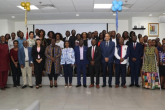
From 19 to 24 April, a team of 11 experts nominated by the three organizations and supported by St. Jude Children’s Research Hospital and RAD-AID, engaged with health authorities and stakeholders, visiting hospitals, teaching institutions and primary care facilities in Accra, Kumasi and Tamale.
At the end of the mission, the team presented its findings to the Ministry of Health, identifying areas where targeted investments could deliver high-impact results. Recommendations include developing an updated, costed National Cancer Control Plan and scaling up early detection, diagnosis and radiation medicine services.
“This imPACT Review has come at a critical and opportune moment for Ghana, providing a clear picture of where we are making progress and an opportunity to reflect on where we still need to do more,” said Ghana’s Minister of Health Kwabena Mintah Akandoh. “We are committed to working with all stakeholders to expand cancer diagnosis and treatment services across the country.”
Rising Cancer Care Needs
Cancer remains a growing public health challenge in Ghana, with over 27 000 new cases and nearly 18 000 deaths annually. Breast, cervical, prostate and liver cancers account for the highest burden, with many patients diagnosed at advanced stages, limiting survival chances and increasing treatment costs.
Several of these cancers, such as cervical and liver cancers, can be prevented through measures such as vaccination, while outcomes can be improved through early detection and timely treatment.
“Accurate medical imaging is the foundation of effective cancer treatment,” said IAEA Technical Officer Anita Brink. “We recently organized a specialized training course in Ghana on breast imaging precisely to enhance diagnostic capacity in the country and the region.”
Childhood cancers, largely curable with timely treatment, remain underdiagnosed, with families often abandoning treatment due to financial and social barriers. Ongoing collaboration under the Global Platform for Access to Childhood Cancer Medicines and the IAEA Rays of Hope initiative offers opportunities to improve outcomes.
“It is inspiring to witness the progress in strengthening childhood cancer care with a growing number of paediatric oncologists, multi-disciplinary teams, and dedicated treatment units nationwide,” said Director for the Sub-Saharan Africa Region at St. Jude Children’s Research Hospital who participated in the mission Gita Naidu.
Building on Strong Foundations
The review highlighted strengths that Ghana can build on to expand cancer care services. These include an existing national policy framework for noncommunicable diseases, ongoing health financing reforms and investments in infrastructure and workforce development.
Ghana also benefits from established cancer registries, strong oncology training programmes and established multidisciplinary cancer care in major teaching hospitals.
Vaccination against human papillomavirus (HPV) and hepatitis B, which help prevent cervical and liver cancers, has been included in routine immunization programmes, although uptake remains low.
“We commend the Government of Ghana for the continued leadership in strengthening capacities across the health system to promote cancer early detection and prompt referral across different levels of care,” said WHO Representative to Ghana Fiona Braka.
Expanding Access to Care
The review identified challenges related to uneven access to cancer services. Health insurance coverage for cancer care is still limited, resulting in significant out-of-pocket expenses for patients.
Advanced diagnostics and treatment, including PET-CT and radiotherapy, are concentrated in a few urban centres, limiting access for patients in other parts of the country.
With only four radiotherapy machines currently in operation nationwide, further investment will be needed to improve equitable access to care.
Recently, the IAEA supported Ghana in developing a bankable document for the expansion of radiation medicine services. “This is an important step towards mobilizing the resources needed to strengthen access to cancer care,” said IAEA Programme Management Officer Amal Elrefaei. “The IAEA has been a long-standing partner and will continue to support Ghana in expanding radiotherapy, including through Rays of Hope.”