Noem Terminates 24 FEMA Workers For Failing To Address Cyber Vulnerabilities

By David DiMolfetta, Cybersecurity Reporter, Nextgov/FCW
An internal FEMA email obtained by Nextgov/FCW ordered all agency employees to change their passwords “due to recent cybersecurity incidents and threats.”
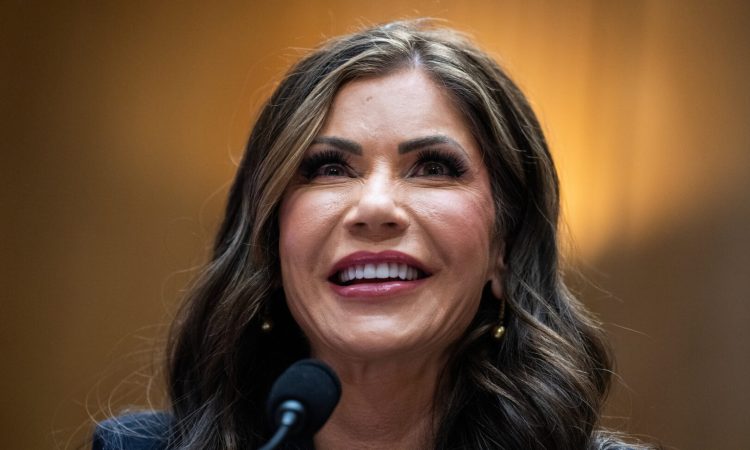
Homeland Security Secretary Kristi Noem is terminating two dozen members in the Federal Emergency Management Agency’s IT department after the DHS agency said the employees failed basic security protocols that allowed hackers to access its networks.
Noem’s office said agency Chief Information Officer Charles Armstrong and Chief Information Security Officer Gregory Edwards were terminated, alongside 22 others. They could not be immediately reached for comment.
A routine cybersecurity review of FEMA’s systems uncovered the vulnerability, DHS said in a statement, which added that the vulnerability was addressed before any sensitive data could be pilfered from its systems.
The review “uncovered several severe lapses in security that allowed the threat actor to breach FEMA’s network and threaten the entire department and the nation as a whole,” DHS said.
An internal FEMA email dated August 18 obtained by Nextgov/FCW ordered all agency employees to change their passwords “due to recent cybersecurity incidents and threats.” It required password changes within two weeks of the email being sent. The email did not provide details about the security issues.
FEMA’s IT employees “resisted any efforts to fix the problem,” avoided scheduled inspections and “lied” to officials about the scope of the cyber vulnerabilities, the agency added.
“Failures included: an agency-wide lack of multi-factor authentication, use of prohibited legacy protocols, failing to fix known and critical vulnerabilities, and inadequate operational visibility,” it said.
DHS was impacted in a sweeping, global hack involving Microsoft SharePoint products last month, Nextgov/FCW first reported. It’s not clear if FEMA — a DHS component office — was affected.
By Edward Graham, Staff Reporter, Nextgov/FCW
Dr. Matthew Miller, the executive director for VA Suicide Prevention, has overseen efforts to explore the use of innovative solutions during his tenure.
The suicide prevention head at the Department of Veterans Affairs is leaving the agency after more than five years of service working to support veterans in crisis.
Dr. Matthew Miller, who served as executive director for VA Suicide Prevention since March 2020, announced on LinkedIn that Friday would be his his last day with the agency and the federal government.
“I depart offering my fullest support and encouragement to VA mission, leadership, and teammates,” he said. “Maintaining Veteran trust in VA services and resources is the utmost and only priority; go Team VA and Team Suicide Prevention!”
VA Press Secretary Pete Kasperowicz said in a statement to Nextgov/FCW that Miller voluntarily left the department and “will be replaced by Dr. Todd Burnett, who will serve as acting executive director for VA’s Office of Suicide Prevention (OSP) and has been a senior leader in OSP since 2022.”
VA has explored the use of innovative suicide prevention approaches during Miller’s tenure, including further leveraging predictive algorithms, machine learning and artificial intelligence tools to better assist and support veterans in crisis.
Of the 227 total AI use cases that VA included in its 2024 inventory, four of those examples were focused, in whole or large part, on identifying and supporting veterans determined to be at a heightened risk of self-harm.
One of these use cases — the Recovery Engagement and Coordination for Health-Veteran Enhanced Treatment program, or REACH VET — launched in April 2017. The suicide prediction algorithm scans VA’s electronic health records to identify veterans in the top 0.1% tier of suicide risk.
Miller and VA worked to recently launch a REACH VET 2.0 model, which incorporates new risk factors like military sexual trauma and intimate partner violence into the algorithm.
In an interview with Nextgov/FCW prior to the rollout of REACH VET 2.0, Miller said the predictive approach offers “that pairing of the innovation and the technology with the human touch.” He noted that the model enhances the work of clinicians and does not replace human interventions.
The department also launched the Mission Daybreak challenge in May 2022 to support innovative solutions focused on reducing veteran suicides. VA has awarded millions of dollars to winning organizations through the program, which has helped to support internal veteran crisis services and external groups directing resources and assistance to those at risk of self-harm.
During a media roundtable in February 2023, Miller said Mission Daybreak supports VA’s broader suicide prevention efforts because it “brings clinical, community, policy and research backgrounds, in context, into innovation and then redeploys innovation back into clinical, community, policy and research settings across the nation and around the world.”
Prior to his role leading VA’s suicide prevention efforts, Miller served as national director of the Veterans Crisis Line from 2017 to 2020. An Air Force veteran, Miller first began his VA career as chief of mental health at the Saginaw VA Medical Center, and then later deputy chief of staff at the same facility.
If you have a tip you’d like to share, Edward can be securely contacted at Grahed.40 on Signal.
Green Finance Tops the Agenda at the World Green Economy Summit 2025
In light of escalating environmental challenges and the global push to achieve net-zero goals, the 11th World Green Economy Summit (WGES) continues to serve as a vital platform for decision-makers, investors and experts from around the world. This year’s event comes at a critical time as rapid advances in artificial intelligence (AI) and data centres intersects with the urgent need to reshape the future of energy towards more sustainable and efficient alternatives. Sessions will explore financial mechanisms driving the green transition, address challenges in scaling up renewable energy and explore avenues for climate finance.
Held under the patronage of HH Sheikh Mohammed bin Rashid Al Maktoum, Vice President and Prime Minister of the UAE and Ruler of Dubai, WGES is organised by the Dubai Supreme Council of Energy, Dubai Electricity and Water Authority (DEWA) and the World Green Economy Organization (WGEO). Each year, the summit addresses key topics related to mobilising global efforts to accelerate the shift towards a green economy, in line with the UN Sustainable Development Goals 2030. The 2025 summit, themed ‘Innovating for Impact: Accelerating the Future of the Green Economy’, will run on 1-2 October at Dubai World Trade Centre.
Vice Chairman of the Dubai Supreme Council of Energy, MD&CEO of DEWA and Chairman of WGEO, HE Saeed Mohammed Al Tayer said: “Global investments in clean technologies, including renewable energy, grids and storage, are projected to exceed USD2.2 trillion in 2025, double the investment in fossil fuels, within a total global investment of USD3.3 trillion. However, developing countries continue to face a significant financing gap, requiring an increase in annual clean energy investments from USD270 billion to approximately USD1.6 trillion by the early 2030s. This underscores the need for innovative international co-ordination to reduce capital costs and mitigate investment risks. The World Green Economy Summit reflects our commitment to supporting global efforts to achieve the transition to a comprehensive and sustainable green economy, based on innovation and effective partnerships, supporting Dubai’s position as a global hub for climate action.”
WGES 2025 will focus on removing barriers to investment-ready green projects and enhancing risk-sharing mechanisms, such as guarantees from international financial institutions, to attract greater capital flows into sustainable initiatives.