
By Alexandra Kelley and David DiMolfetta
A deluge of executive actions on artificial intelligence are set to be released this week, each underscoring the pro-innovation, America-first Trump administration posture toward AI, people familiar say.
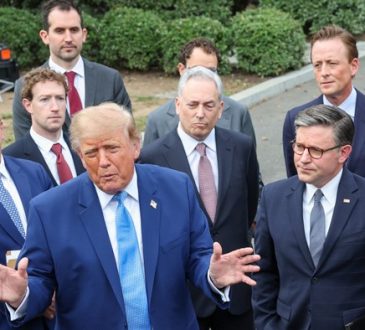
President Donald Trump plans to sign three AI-focused executive orders in the runup to the release of the administration’s sweeping AI Action Plan anticipated Wednesday, according to multiple people familiar with the matter and outlining documents obtained by Nextgov/FCW.
The orders are expected to be signed either on Tuesday or before the White House’s AI Action Plan event kicks off on Wednesday, said the people, who requested anonymity to candidly discuss details of the plans. Each order focuses on one of three aspects of artificial intelligence regulation and policy that the administration has prioritized: spearheading AI-ready infrastructure; establishing and promoting a US technology export regime; and ensuring large language models are not generating “woke” or otherwise biased information.
Each order builds off established Trump administration policy in each of their specific arenas. The AI Infrastructure directive, for instance, would address energy and permitting issues associated with data centers and the computational demands of running AI applications. It stipulates the Department of Energy issue requests for proposals for new data centers at three Department of Energy sites.
The second order is set to help accelerate the export of US-made AI technologies alongside the US International Development Finance Corporation and Export–Import Bank of the United States, seeking to further enable global diffusion of the US-made AI software buildouts.
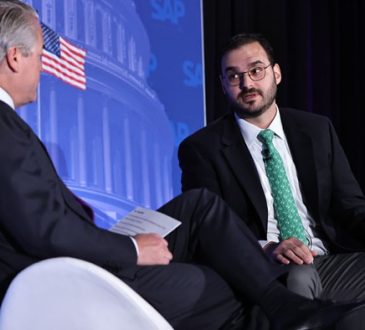
The third directive will focus on removing “woke AI” and ideological bias from large language models, particularly within AI tools procured by the federal government. Two industry sources told Nextgov/FCW that the primary architects behind the “woke AI” order are the White House AI and crypto czar, David Sacks and the White House’s senior policy advisor for AI Sriram Krishnan.
The AI Action Plan
Set to debut on July 23, the Trump administration’s AI Action Plan would also seek to boost AI adoption within the federal government and give the UdhsS a technological edge on the world stage. The unveiling event is set to be hosted by Sacks at the Mellon Auditorium in Washington, D.C., according to one of the documents viewed by Nextgov/FCW.
Key initiatives within the plan focus on incorporating AI across the Defense Department and creating an AI Information Sharing and Analysis Center led by the Department of Homeland Security to overwatch AI-linked cybersecurity threats, according to that document. DHS would also be asked to issue AI-specific cybersecurity guidance for the private sector and to regularly update it.
A DHS spokesperson and a spokesperson for the Cybersecurity and Infrastructure Security Agency did not immediately respond to a request for comment.
The National Institute of Standards and Technology would also be tasked with revising its AI Risk Management Framework. Originally released in 2023, the updated framework would have to eliminate references to diversity, equity and inclusion, along with details related to misinformation and climate change.
Open-source and open-weight AI development will also be prioritized, seeking to ensure a level of transparency in AI model creation.
The prospective plan aims to scale domestic infrastructure so that it is ready to support the computational demands of AI programmes. It would also seek to streamline permitting requirements for data center construction. Workforce development within the US is also a priority, with the aim of creating more primary and secondary education programmes, as well as advanced training for undergrad and graduate students.
The AI Action Plan is also expected to emphasize keeping the US competitive on the global tech stage. The Department of Commerce will lead efforts to export the full US-made AI technology stack and promote the development of “secure-by-design” applications abroad — a nod to secure-by-design principles outlined in early days of the Biden administration, in which software builds have baseline security measures baked into them by default.
The plan would also seek to push back against Chinese influence in international standards-setting bodies and multilateral organizations. Officials have long argued that failing to counter Beijing’s sway in these forums could tilt international norms toward authoritarian models of technology governance and give China a leg up in military innovations.
“The [AI Action Plan] will deliver a strong, specific and actionable federal policy roadmap that goes beyond the details reported here and we look forward to releasing it soon.” White House Office of Science and Technology spokeswoman Victoria LaCivita said in a statement to Nextgov/FCW.